
One State Down, 13 To Go!!

Day 4. It was chilly and drizzling leaving Mountain Crossings at Neal Gap. We had another foggy day of climbing up and down the ridge line in the Southern Appalachians. After 6 miles, we hit Tesnatee Gap where The Trail crosses a highway. A small group from another Baptist church was doing Trail Magic. They graciously handed out Gatorade, sodas, chips, cookies, and crocheted hats!


We spent the rest of the day hiking another 5.5 miles into Low Gap Shelter. The big word on The Trail recently has been Norovirus. What’s Norovirus? A true fear for hikers, Norovirus is a nasty bug that is caused by human waste infecting water sources. It is easily spread between hikers through shelters, dirty hands sharing food, and drinking from contaminated water sources. The bug is treatable but can cause gastrointestinal issues from both ends, simultaneously, for up to three days. No thanks.
Sooo… the telephone-like game that is primary communication on The Trail informed us that uh… evidence (ew)… of Norovirus had been found at Blue Mountain Shelter. Rumor had it that the virus was contracted from the water source at Low Gap Shelter where a privy was overflowing (eww). 11.5 Miles.
Day 5. We left camp at about 9. Foggy, chilly, and mildly miserable. I hiked a brisk 9.7 miles in the drizzle and fog. Trail Magic had been rumored and, again, came through. Another church group blessed us with big, juicy cheeseburgers. I nearly ran the last half mile upon smelling a grill. My fastest pace yet, actually – 9.7 miles in 4 hours.
 Let’s be honest. I knew our hike was taking us to Unicoi Gap where we would hitch into Helen, GA, for our first night in a hotel. After we devoured a burger, Big Foot and I put on our smiles and stuck out our thumbs for a ride 9 miles into Helen. Luckily, a retired woman in a minivan with her slobbering pug pulled over and drove us into the small, tourist trap town. This woman was born and raised in Helen and watched the changes over the years. Helen has been turned German and proudly hosts one of the biggest Oktoberfests in the country.
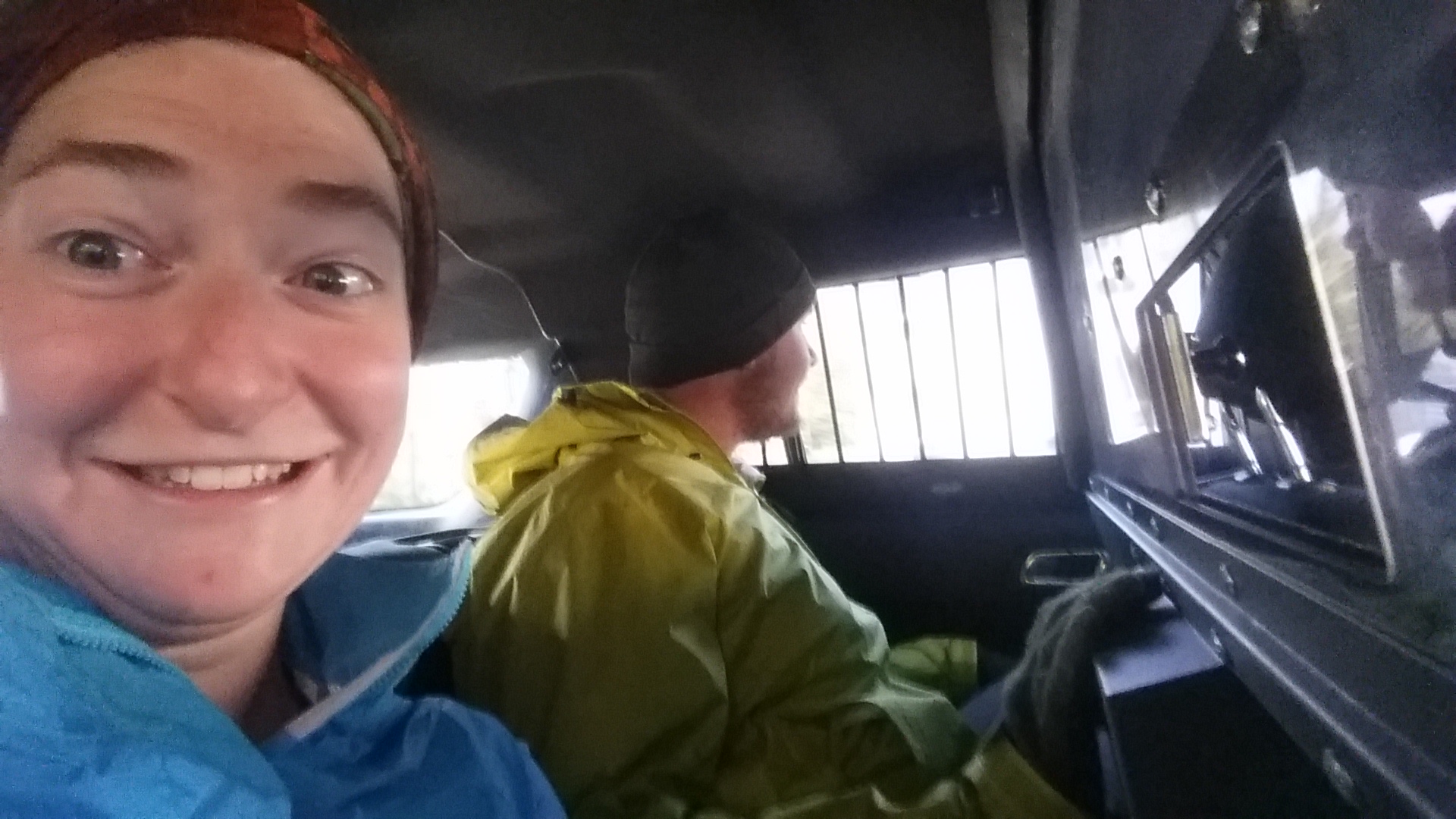
Day 6. We left Helen in the morning and tried our thumbs again to get back to Unicoi Gap. A cop spotted us and pulled over. At first, I was concerned we were in trouble. However, he offered us a ride to the city limits. We had to sit in the back though…
We hitched the rest of the way with a man heading out for a day hike. When we arrived back at Unicoi Gap, we noticed The Trail had frozen overnight, and we quickly made our way down (actually up) the white blazes on this clear, bright and chilly day. 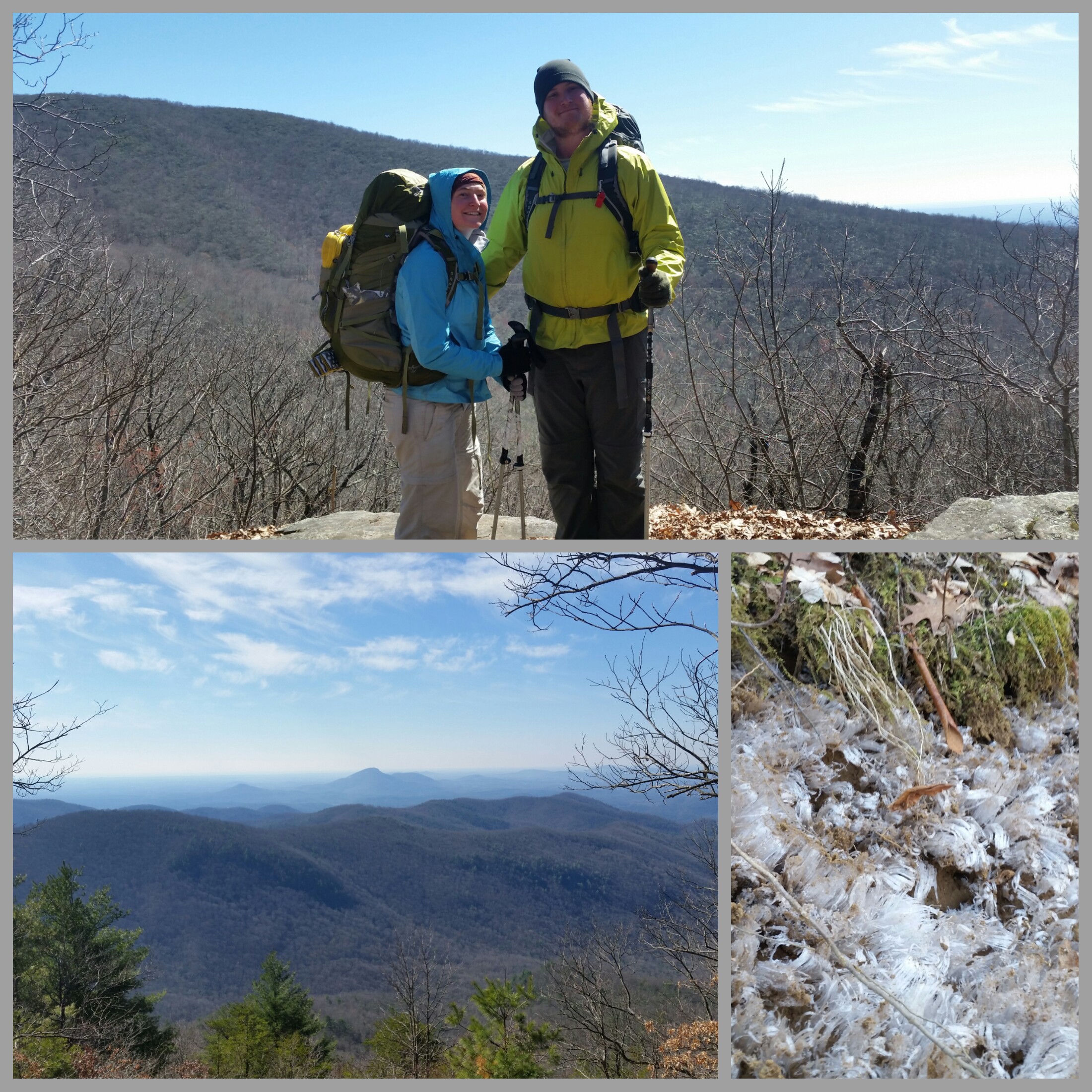 A surprise came around noon 4.4 miles in. Red Truck and Green Truck were holding their 13th annual Feed the Hikers weekend. These two former thru-hikers spend one weekend a year with their extended families camping, cooking, and drinking! These Super Angels shocked us with an incredible amount of food including eggs, hashbrowns, hot dogs, chili, mouthwatering Southern pork bbq, soda, coffee, and BEER! We were blown away.
 The rest of the day proved quite challenging up and down Tray Mountain. Camped at Sassafras Gap in 21 degrees! 10.4 miles.
Day 7. We tore down camp quickly in the cold – frustrated by my freezing finger tips. A short day of hiking led us to Dick’s Creek Gap where we relaxed in the warm sun. Sean’s cousin, Beverly, drove two hours from Chattanooga to bring us lunch and give us a ride into Hiawassee, GA. We grabbed a room at Mull’s Motel, showered, and nearly sprinted to the nearest restaurant with an all you can eat option. Sean and I, along with plenty of other hiker trash, smashed a fried chicken buffet called Daniel’s. I’ve had a little trouble with my right ankle swelling. A hotel room was worth the extra money to rest and keep ourselves out of the rain. 6.3 miles.
Day 8. Morning came, and we hitched back to pick up The Trail. 9 Miles in we hit our first milestone as we crossed the Georgia – North Carolina border. One State Down!!! North Carolina welcomed us immediately with an 800 ft climb over 2 miles. Beautiful, but strenuous. 
During the last part of the hike, I passed The Bionic Woman, so named for her prosthetic leg. If When she finishes, she will be the first female to complete the thru-hike with an artificial leg. Before her accident, she completed the Pacific Crest Trail and cycled across the country. Badass defined. 11.8 miles.

Day 9. We awoke to a beautiful morning and climbed the very well graded Standing Indian Mountain. Lots of hikers ended up at the same campsite. Guitar and campfire ended the day perfectly. 12.5 miles.
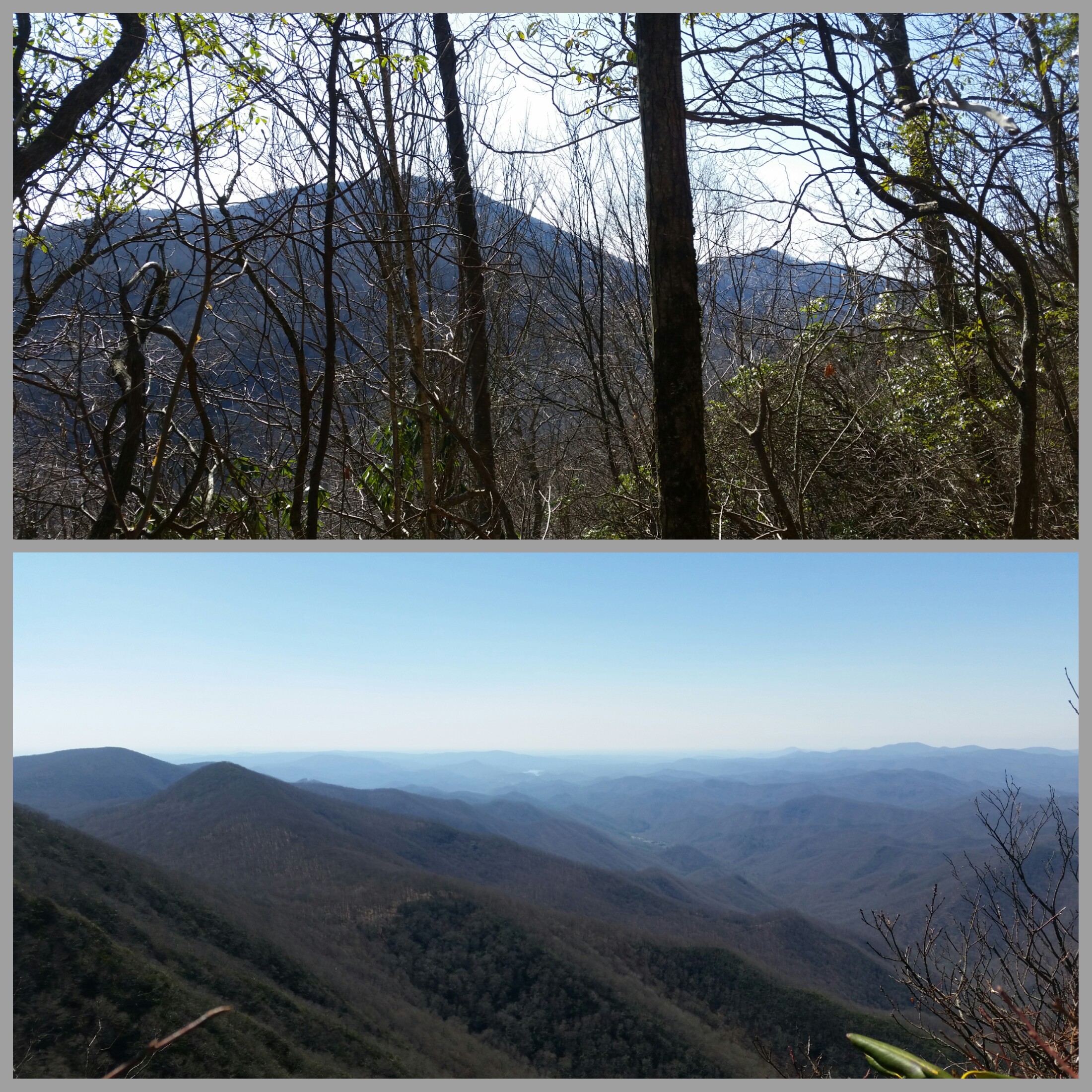
Day 10. Another beautiful day of hiking. We ascended the steep climb up Mount Albert and were rewarded with a lookout tower for 360 degree panoramic views. Another milestone – Mile 100 on The Appalachian Trail!! A few miles later, we arrived at our shelter for the night. Lots of hikers, some familiar, everyone eager for tomorrow. Nice weather, brilliant moon and stars after the colorful sunset. 8.6 miles. 
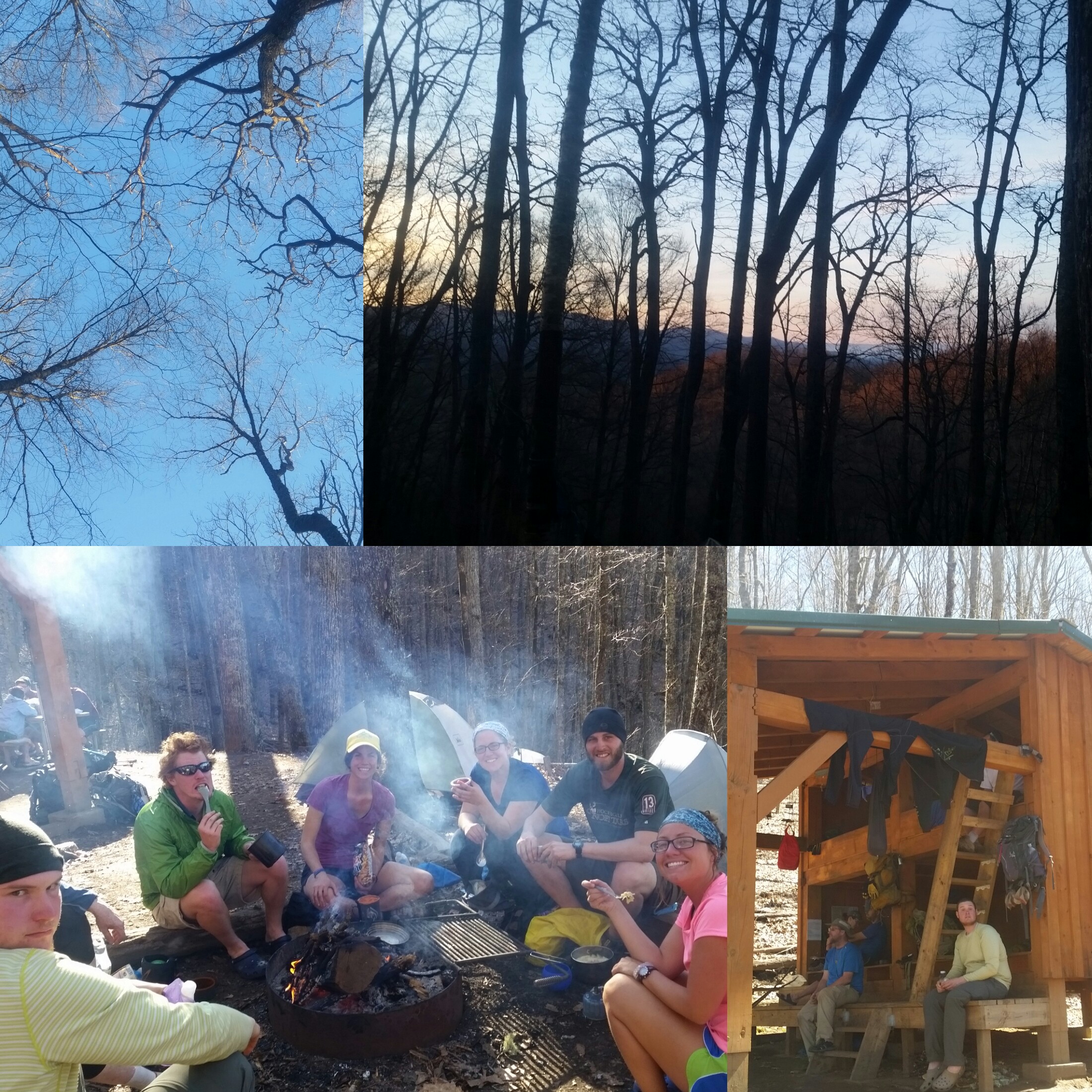 Day 11. We awoke early to hike the 7.3 miles to Winding Stair Gap to hitch a ride into Franklin, NC. The drizzle and fog didn’t dampen our spirits too much as we were excited to eat a good meal and take our first zero mile day. Eager and impatient 7.3 miles.

109.8 Down, 2075.5 until Katahdin!!!!

First Days of Life on The Appalachian Trail

I’m in love, I’m in love and I don’t care who knows it!!!  Wow, the first few days on The Appalachian Trail (AT) have been one heck of a ride. A beautiful challenge, a wondrous gift, an awe inspiring blessing.
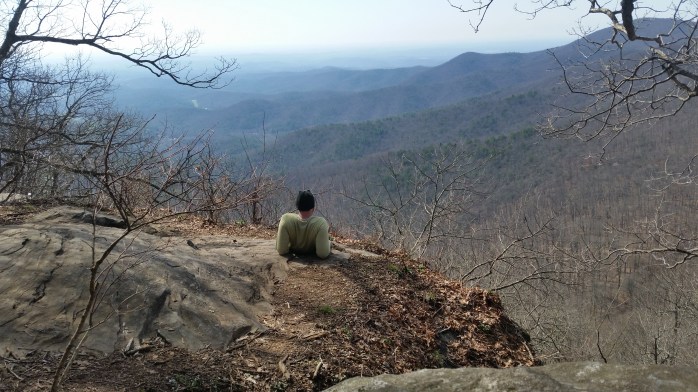
They say there’s a honeymoon period between hikers and The AT towards the beginning of the trek. Well, I’m hoping this smile doesn’t fade anytime soon. So far, so good. The views are incredible, fellow hikers look out for each other, and the entire community in the area supports thru-hikers. They want you to make it, and don’t mind giving a hiker a hand (or extra soda) when in need.
Sean and I spent the night in Chattanooga, Tennessee with his cousin before the adventure began. We went out for a final pre-trail dinner and discussed his cousin’s thru-hike that he completed in 2011. He calmed our nerves and was very encouraging. We felt as prepared as we were going to get.

In the morning, Sean’s parents drove us the rest of the way to Amicolola Falls State Park where the 8.8 mile Approach Trail begins. The Approach Trail welcomes you with a daunting 600 stairs, but graciously gives back with gorgeous views of the falls. The Approach Trail ends at the summit of Mount Springer where The Appalachian Trail officially begins. Technically, those 8.8 miles (and stairs!) “don’t count” towards the 2,189 miles on The AT.

Day 0 was rainy but our spirits were still high. The stairs weren’t so bad and the falls were worth seeing. After completing the Approach Trail, we made some food and stayed at a dry shelter near the summit of Springer. We went to bed probably too early thinking about the long days ahead. 
 Day 1 (on The AT). Sun! We made coffee, had breakfast, packed up, and were off by 9:00. We walked a brisk 7 miles under a brilliant, blue sky when we came to another shelter.

It was about noon and we were still feeling like moving. We had some lunch and made our way. We kept walking up and down mountains and headed to the next campsite near water. We finished the day in good time (around 5), but realized we pushed our bodies a little too hard for our second day! The AWOL guide quoted our day at 14.2 miles. I felt a bit faint coming into camp, but was able to eat my way out of it. Lesson learned. Eat! And eat often!
Day 2. Word on The Trail was there was trail magic at Gooch Gap. What’s Trail Magic? Some beautiful souls known as Trail Angels set up camp where The Trail crosses a road. These lovelies gift hikers snacks, sodas, and even full meals on occasion. Food is a hikers best friend. After breaking down camp, we made our way 1.4 miles into Gooch Gap and met the legendary Trail Angel, Miss Janet. Miss Janet and a group of helpers passed out sodas and had Fruit Loops with cold milk.

We finished the day at Lance Creek completing 9.9 miles. We set up the tent, filtered water, and started cooking. We seem to be forming a routine for life on The AT. 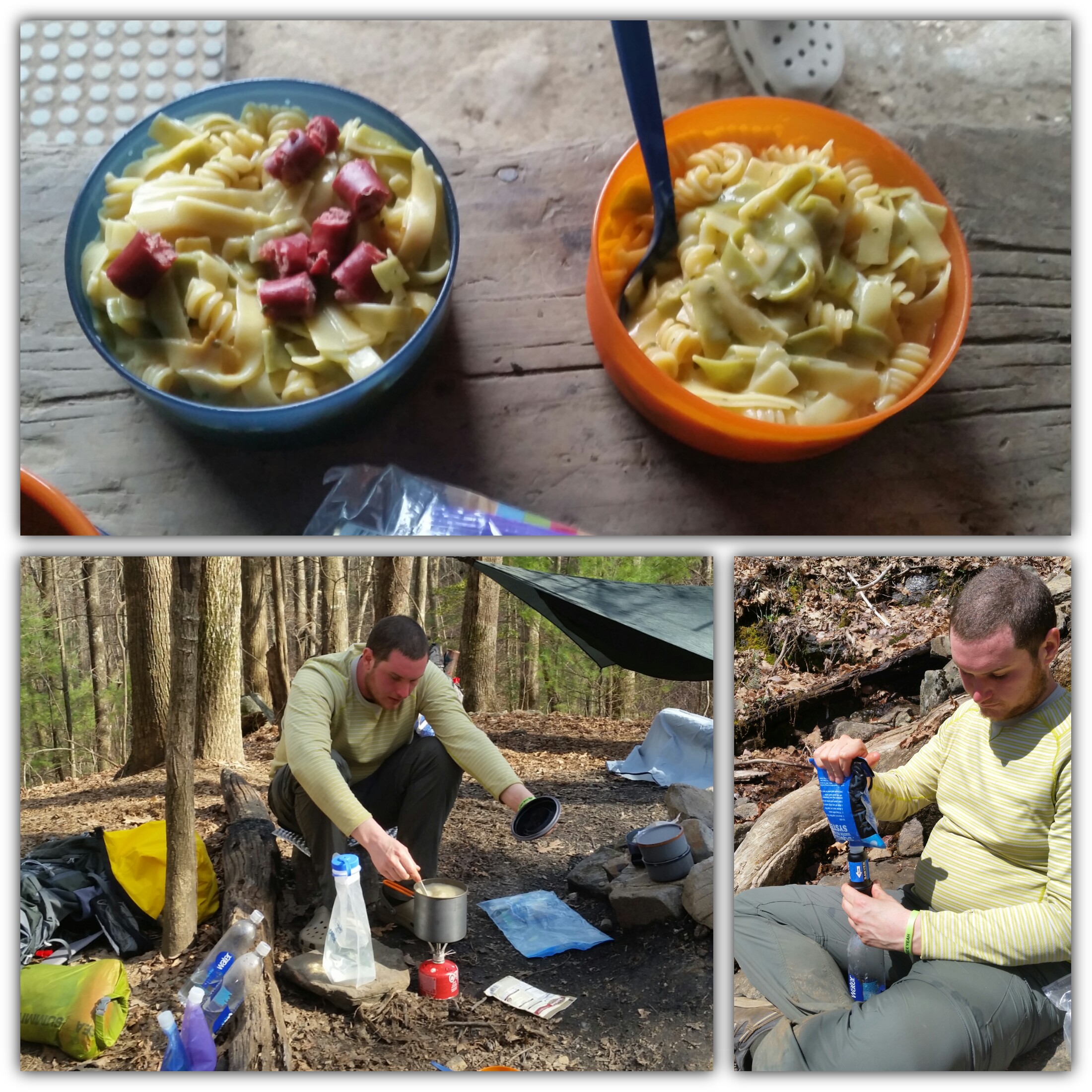 That evening, the campsite held approximately 30 other hikers (most of them also shooting for Maine). We’re all starting to get to know each other and creating “trail names.” Sean has been dubbed Big Foot. We’re hiking with Radio, Two Sticks, Hot Wing, Foxy, and Pippi to name a few. Mine, like many others, is yet to be determined.
The night ended with a chit chat over a campfire. The clear sky sparkled with stars and a crescent moon. We really felt right at home.
Day 3 began with dense fog. We broke down camp and made our way. Everyone was in good spirits today. The relatively short 7.4 miles included the hike up and down Blood Mountain and ended at Mountain Crossings in Neel’s Gap. Mountain Crossings is directly on The Trail, literally the only point were the trail goes through a building. There, you can do a full resupply, “shakedown” your pack, buy improved gear, and even stay at the hostel if you are ready for a real bed and a shower. Sean and I enjoyed the hike up and down Blood Mountain in the fog. The summit is known for some of the best views of Georgia. Well, just fog today.

Climbing down the mountain was a bit tougher and involved a rock scramble.

Around 2, we were happy to get to Mountain Crossings. We were warmly welcomed and greeted by many familiar faces.
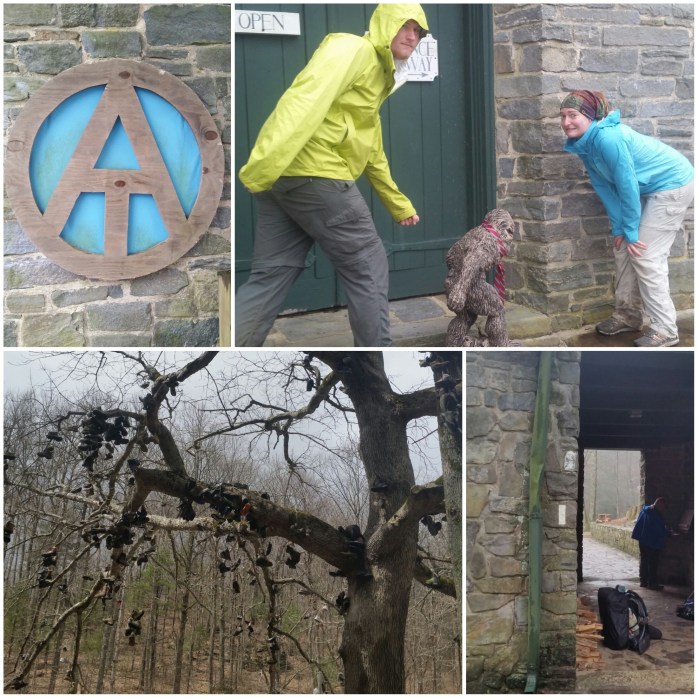
Ooh… something else familiar! Our first drop box we sent ourselves before we left home was waiting for us at Mountain Crossings. We sorted our goodies, set up camp, and were able to charge our phones and clean up a little. We heard a little rumor about the possibility of more magic that evening.
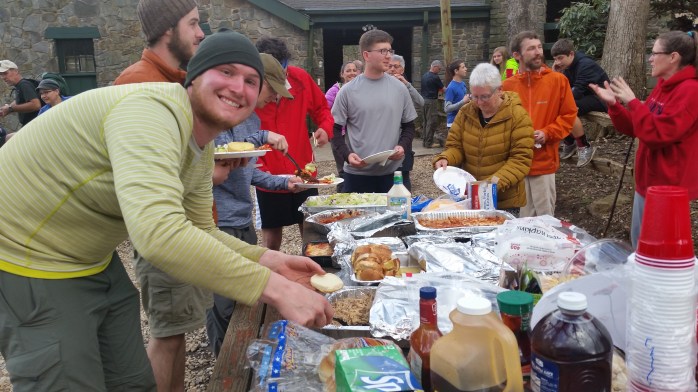
And what do you know? Dinner arrived. Wow, what a blessing! A church family from Florida decided to spend their spring break on The Trail feeding thru-hikers. They showed up with multiple trays of meat lasagna, veggie lasagna (how thoughtful!), garlic bread, salad, pulled pork, soda, sweet tea, and cake.

I almost cried my tears of gratitude. All of our heaping plates were devoured in minutes. We all sang our praises for this special gift. I got a chance to chat with them a bit and give them a little insight to what we’ve been up to out here. The adults were about to head to Guatemala in a few weeks for their annual mission trip. The kids seemed like they were really enjoying their time out here. Believe me, their generosity will be remembered for a miles away.
Well, it seems to me this will be the routine on the trail. Breakfast, break down camp, walk, snack, walk, walk, snack, walk, set up camp, filter water, eat, sleep, repeat. We’re at mile 31.7 and also completed 8.8 on The Approach Trail for a total of 40.5 miles. Not bad. Although it most certainly hasn’t been easy, our spirits are high and really… I can’t think of a better way to spend my time.
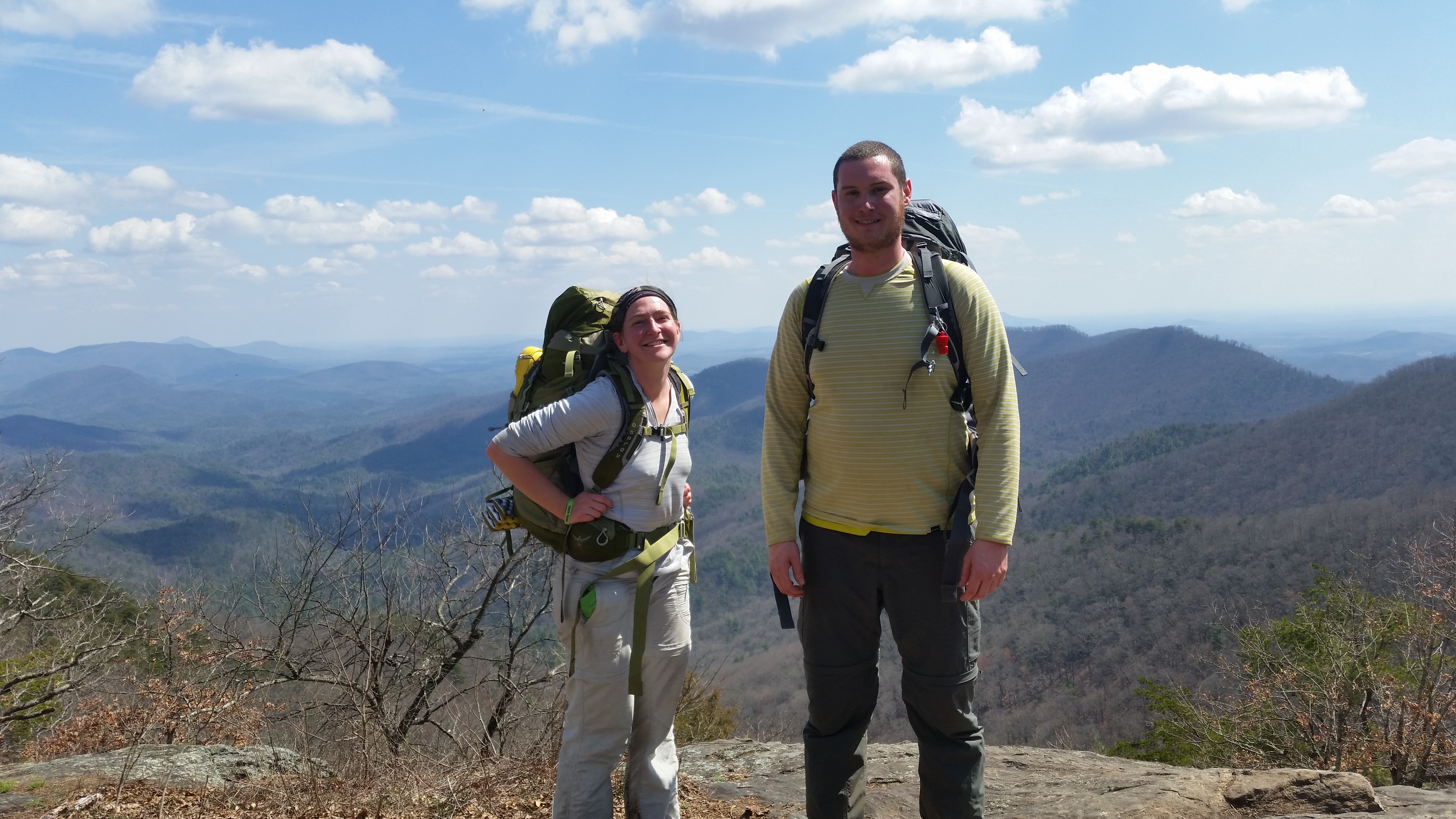
Wish us luck. Only 2153.6 miles until Katahdin!!!

The Appalachian Trail – Basic Questions Answered

Wait… what are you doing?
In just a few short days, Sean and I will be heading to Georgia to attempt a thru-hike of The Appalachian Trail.
The Appalachian Trail (AT) is one of three long footpaths in The US. The Trail runs from Springer Mountain in Georgia to Mt. Katahdin in Maine crossing 14 States.
I’ve been asked a lot of the same questions so I thought I’d post the answers here. Sometimes I forget I’ve been studying these facts and the answers aren’t necessarily common knowledge.
1. How long is it and how much time does it take to complete?
The 2015 length is 2,189 miles though the mileage changes slightly every year due to trail and road reroutes. We expect to complete the entire hike in about 5 months. Starting out, we hope to complete about 10 miles per day. Once thru-hikers are in shape, that number can go up to 20 miles per day. Depending on individual athleticism, hikers can hike 30 or more miles per day. Overall, we need to average 12 miles / day which includes “zero” days to finish in 5 months. Check out Appalachiantrail.org and Appalachiantrials.com for an incredible amount of details on The AT itself.

2. How do you get water and food?
The AT has frequent accessible fresh water sources. We are carrying a filter for purification.
Food, on the other hand, will be bought at grocery stores and convenient stores along the way. The Trail approaches towns every 4-7 days. There are parts of The AT that resupply is a bit difficult. That’s were we’ll send mail drops.

3. What’s a mail drop?
AT hikers use the postal system for survival. Literally. Post offices will hold packages for 30 days and many local businesses accept boxes for thru-hikers. Hikers can pre-ship themselves boxes full of food or have a friend or family member ship them for you. Mail drops are a debated topic amongst hikers on whether they are necessary or save you money once shipping charges are factored in. Sean and I decided to do 5 of them and send them to more remote places.

4. What kind of food do you eat and how do you prepare it?
Hikers can burn 4,000+ calories per day. That’s a lot of food. Because we have to carry everything, weight of food and packaging is always considered. We only want to carry non perishable foods with little water content in packages (no cans).
Breakfast – Oatmeal, cookies, or poptarts
Lunch and Snacks – Peanut butter, tortillas, trail mix, jerky, granola bars, nuts, candy bars, chex mix, cookies, jerky
Dinner – Ramen, Norr Pasta Sides, or instant mashed potatoes with packaged chicken, tuna, or salmon
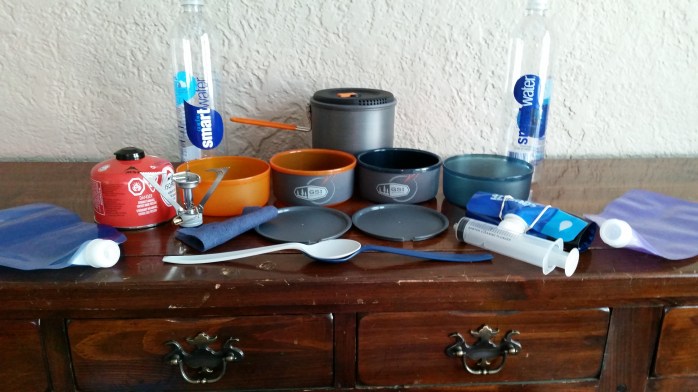
Yes, we can cook that oatmeal or pasta with our Pocket Rocket camp stove and cook set. Stove screws on to the fuel can and is able to boil water in less than 3 minutes.
5. What kind of gear are you taking? How much does it weigh?
How do I answer this simply without boring you…? There are some hikers that love gear chatting. I am not one of them. I’m super blessed to have Sean as my gear guru.
While the excruciatingly detailed list can be found here, the Cliffnotes version is as follows:
Clothing: 1 full hiking outfit, 1 full camp outfit, rain jacket, down jacket, trail runners, and crocs for camp
Sleeping: Tent, Sleeping Pad, Sleeping Bag, Sleeping Bag Liner
Cooking: Small stove, fuel can, cooking pot, bowls / mugs, spoons, water filter
Odds and Ends: sunscreen, toilet paper, bandaids, moleskin, needle and thread, ibuprofen, multi vitamin, toothbrush, toothpaste, Dr Bronner’s all purpose soap
We both have Osprey packs. Mine weighed in at 16 lbs and Sean’s 21. We’ll add 8-10 lbs at a time for food and water.

6. Are you bringing a gun?
Yea, we’re strapped! Don’t mess with us.
7. How much is this trip costing you?
For the trip itself, we are shooting for $1 / mile each making our goal $4400 total for 5 months. We have already invested about the same amount into our gear. Overall, the trip is budgeted to cost about $9,000 for two people for five months of hiking. Not too shabby considering that is literally all of our living expense. Compare it this way – how much do you pay for rent, clothing, and food for 5 months???
8. What kind of hiking experience do you have?
Well, not a whole lot. During my trip through Latin America I completed my first two overnight hiking trips. The first was 3 days / 2 nights in Los Nevados National Park near Salento, Colombia. Over the course of about 8 hours we walked about 10 miles and climbed 2000 meters from an elevation of about 2000 m finishing a little over 4000 meters.

My second overnight backpacking trip was the Inca Trail to Machu Picchu over 4 days / 3 nights. The Trail took us up to 4200 meters.
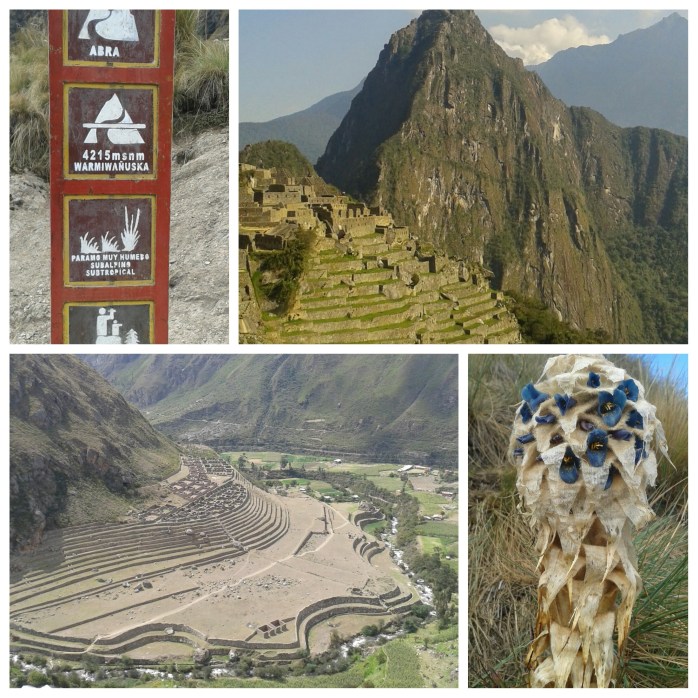
Although I don’t have extensive experience, both of these hikes exceed the altitude of the entire Appalachian Trail. I’m glad I know my capabilities.
We’ve really enjoyed our time this winter surrounded by friends and family, but it seems our restless spirits are ready to go! Research, gear buying, map studying, money making, and mental prep are wrapped up. Most of our “see you laters” have been (sadly) said. We’re as prepared as we’re going to be. Wish us love and luck!!!
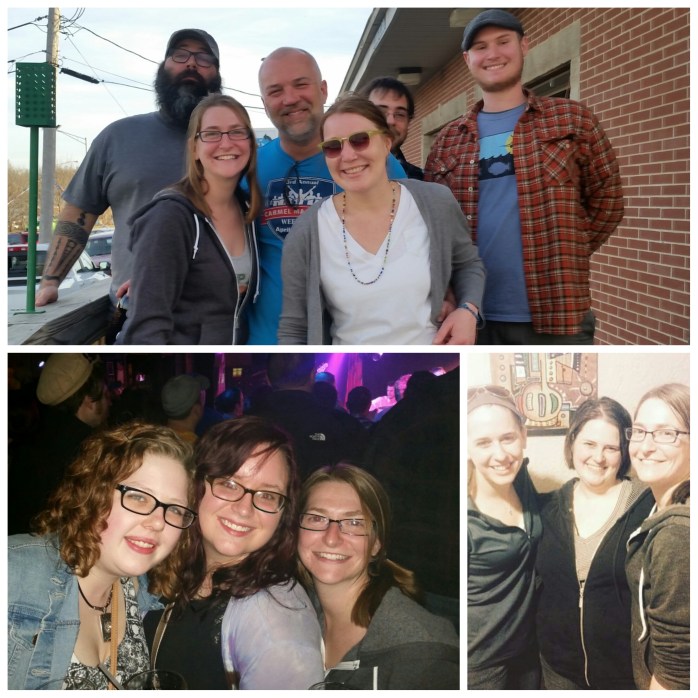
We’re (almost) off!!
13 Ways to Start Seeing the World on a Budget

Ok, it’s not free…
but you know that you can budget travel, right?
Right?
Psst…I spent less than $7,000 traveling through Central and South America for 5 months not working (and it so could’ve been cheaper). Seven grand may sound like a lot. But think of it this way… I have made around $20,000 annually for the past few years working in the restaurant industry. I was able to pay my rent and bills but *used to* have nothing else to show for it. Where did all that money outside of bills go? If you start crunching the numbers, budget travel is certainly possible, and here’s how.
1. Start Saving Today.
If you want to go see the world, you’ve got to quit spending $20 frivolously at the bar, Target, take-out, etc. Struggle through with Netflix. It’s worth it.
2. Make a daily budget!
Where does that money outside of bills go? Write out your monthly bills and see what extra can be put in your new savings account for the big trip.
3. Create a travel budget.
What area of the world are you going to? How much is accommodation and food for the day? The internet is an extension of your hand. Use it!!! I created a $30 / day spending budget for my trip via my information from the internet and travel blogs. They are the best resource you could ask for – by traveler for traveler. Check out WikiTravel, Lonely Planet, and Nomadic Matt.
4. Use Hostelworld.com.
Yes, I’m saying stay in hostels. Hostels are not scary, sometimes dirty, generally awesome places to meet people from all over the world who have traveled the globe and somehow you are now part of their path. I never spent more than $15 / night in various hostels (of various qualities). Most times it was less than $10.
5. Use couchsurfer.org.
I never used it but have heard nothing but the best things. I intend on being a host when I’m grounded again!
6. Travel like the locals do.
Take the cheap, local bus. Use the budget airlines like Spirit. I traveled through all of Latin America by bus… even El Salvador and Colombia. Everyone takes the bus. And they know where to point the “gringas.”
7. Be flexible with your flights.
Flights in and out of a foreign country are your biggest expense. Although one-way is logistically simpler, round trip tickets will save you money. I use Skyscanner.com, Kayak.com, and Studentuniverse.com (no you don’t have to be a student). Make sure your dates are as flexible as they can be. Mid day Tuesdays seem to be the best bet. It helps to be slightly flexible with where you’re going too. It may be significantly cheaper to fly into one place and bus to the next. (Ex: It costs almost double to fly to Belize versus Cancun when it’s a 8 hour bus ride away.)
8. Stay in one place longer.
My first trip I wanted to go everywhere, and, well, I did. But I missed some great places in order to travel greater distances. You can stay in one place for a lot longer and spend less money than you can bouncing around from country to country.
9. See what you can without a tour.
Many places you can see by taking a local bus. A lot of times, you don’t need a guide or a private ride. You can do it all by yourself and save tons in the process.
10. Register with an online bank.
I spent over $200 on ATM fees over the course of my trip. Not cool. Also, check out a good rewards credit card without international fees. I love my Chase Sapphire Preferred card.
11. Don’t book everything in advance.
Not only does this give you flexibility, it can also save you major dollars. For example, we took an Amazon tour while in Peru but waited until we were there to shop around. Others on our exact same tour booked online and paid, literally, double. Relax, and let the road decide…
12. Learn some of the language.
If you’re leaving English speaking territory, learn a little of the dominant language. How do you know you aren’t getting ripped off if you don’t know the numbers?
13. Work or Voluntour Abroad!
Being an English speaker is a hot commodity. There are many jobs out there for you just because you speak English! There are also tons of work exchange options all over the world. I highly recommend Workaway.info. The site has everything from farms to hostels to housekeeping. Work for 20ish hours / week, free board. Sometimes free food too; rewards and conditions vary.
I come from relatively low income and have student loan debt. I figured it out. If you want to travel, go!
Feel free to leave any questions in the comments below!
Follow Along
Final Leg: Northern Chile, Valparaíso, and Buenos Aires
Well we escaped our Arequipa slump, vacation, rest and decided to keep heading south. We had planned to visit Bolivia but got discouraged by that $160 reciprocity fee (After, we learned this has been reduced to $50 O.o). Onward to Chile.
We took an overnight bus from Arequipa to Tacna. From Tacna, you have to take a collectivo, go through customs, and arrive in Arica on the Chilean side.
We’ve really been playing things by ear, but we decided we would take an overnight bus wherever we headed.
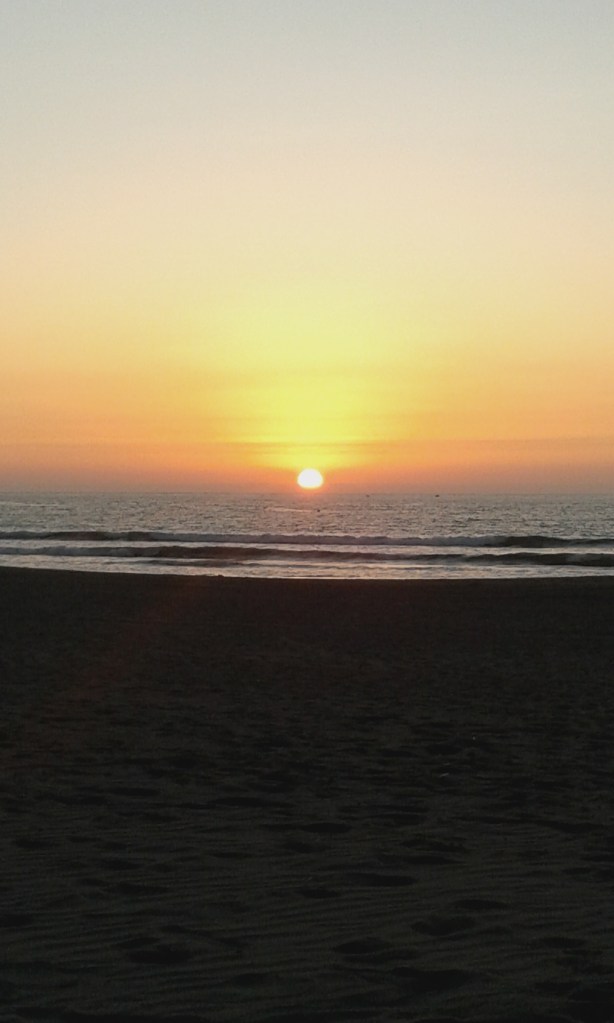
Well, might as well enjoy the Pacific while it’s there. We spent the day walking along the beautiful beach. We met a few people who were quite friendly… a welcome change from Peru. We went to a restaurant with big portions, good food, and good service. The roads were nice. There was public exercise equipment lining the shore. An hour away from Peru and we were in a whole new world.
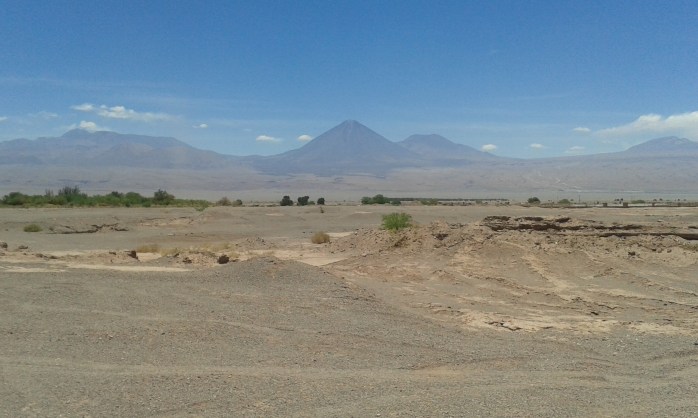
We made up our minds and booked an overnight bus to San Pedro de Atacama with a stop over in Calama. At 5 am we stopped at Calama and had to kill a couple hours until our next bus to San Pedro. We had a little scare when one of our bags was nearly stolen. Apparently, Calama is notorious for theft. Close one.
By 10 am we had made it to San Pedro, an oasis in the heart of the Atacama desert. We spent the day resting and decided the next day to explore around a bit.

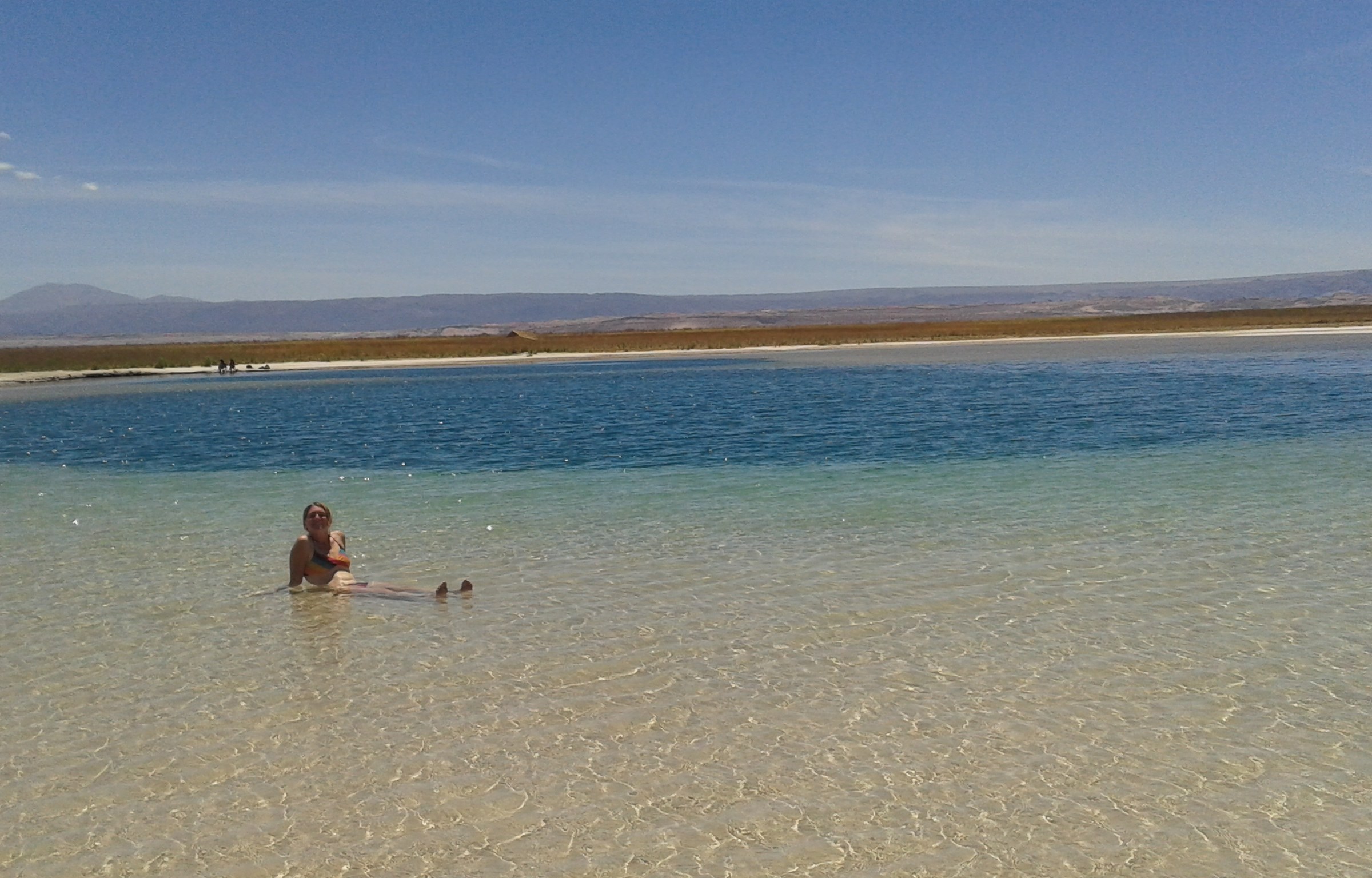
We decided to visit Laguna Cejar the next day, about 20 km by bike. Onward we road into the desert admiring the strikingly different landscape.


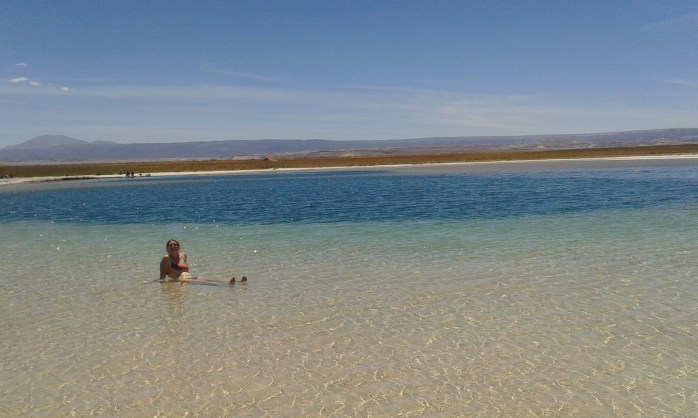
At the Laguna, we changed into swimsuits and floated in the salt saturated waters.
20 km and sore asses later, we were back in San Pedro and enjoyed clear skies for star gazing.
San Pedro is nice, but definitely on the costly side and full of tourists. So, the next day, we took a bus to Valparaiso. A 24 hour bus. Woof.
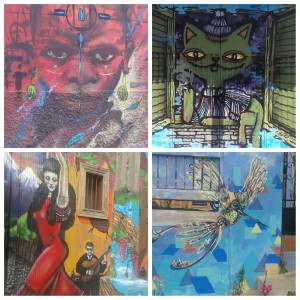
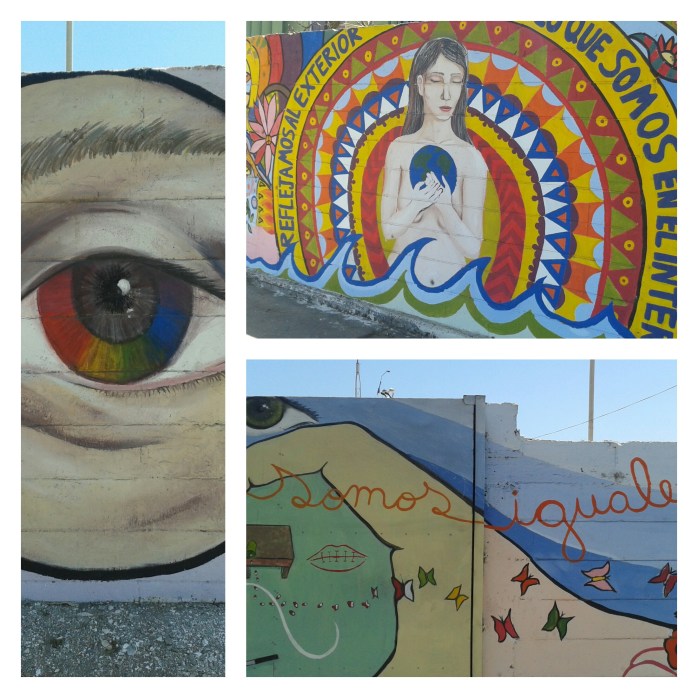
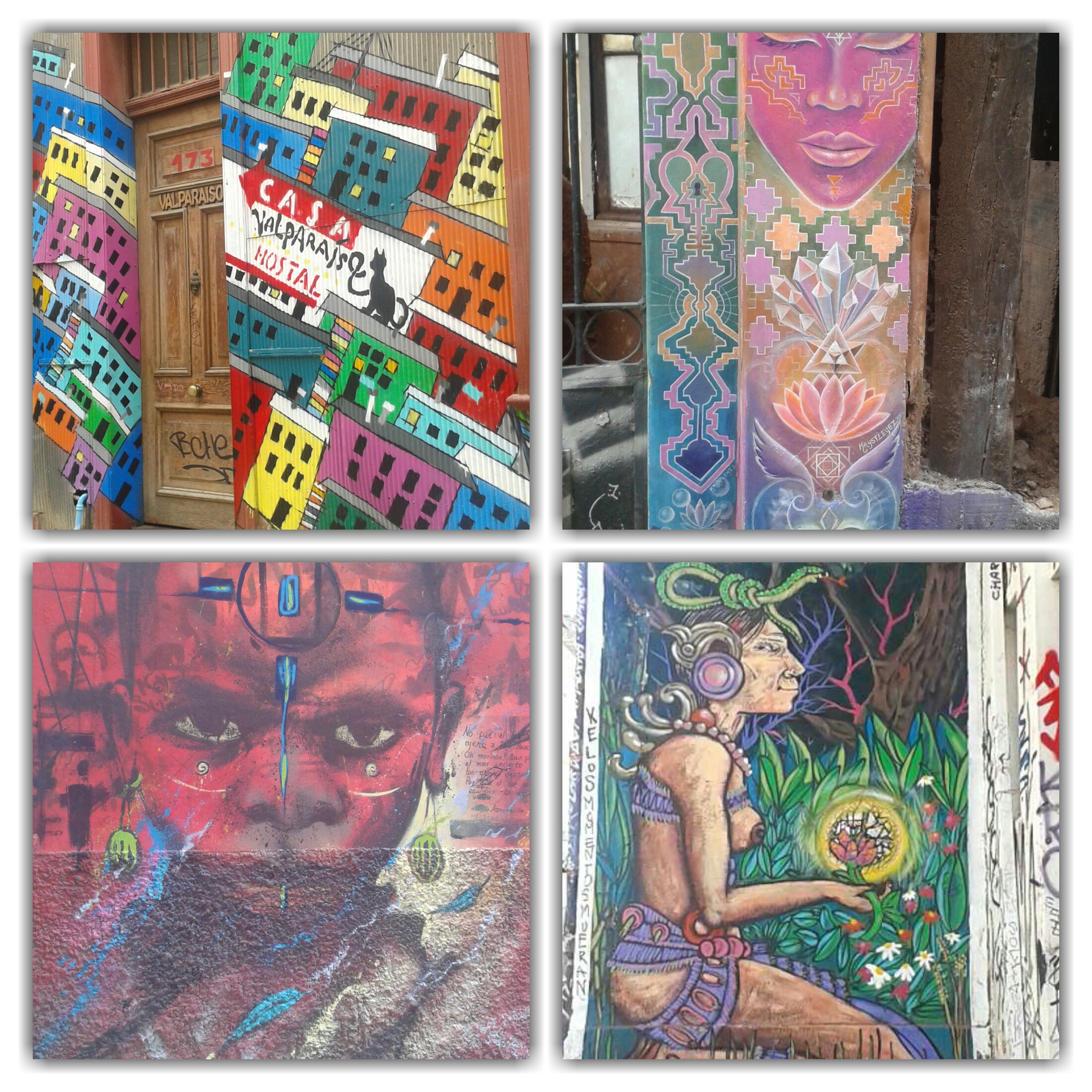
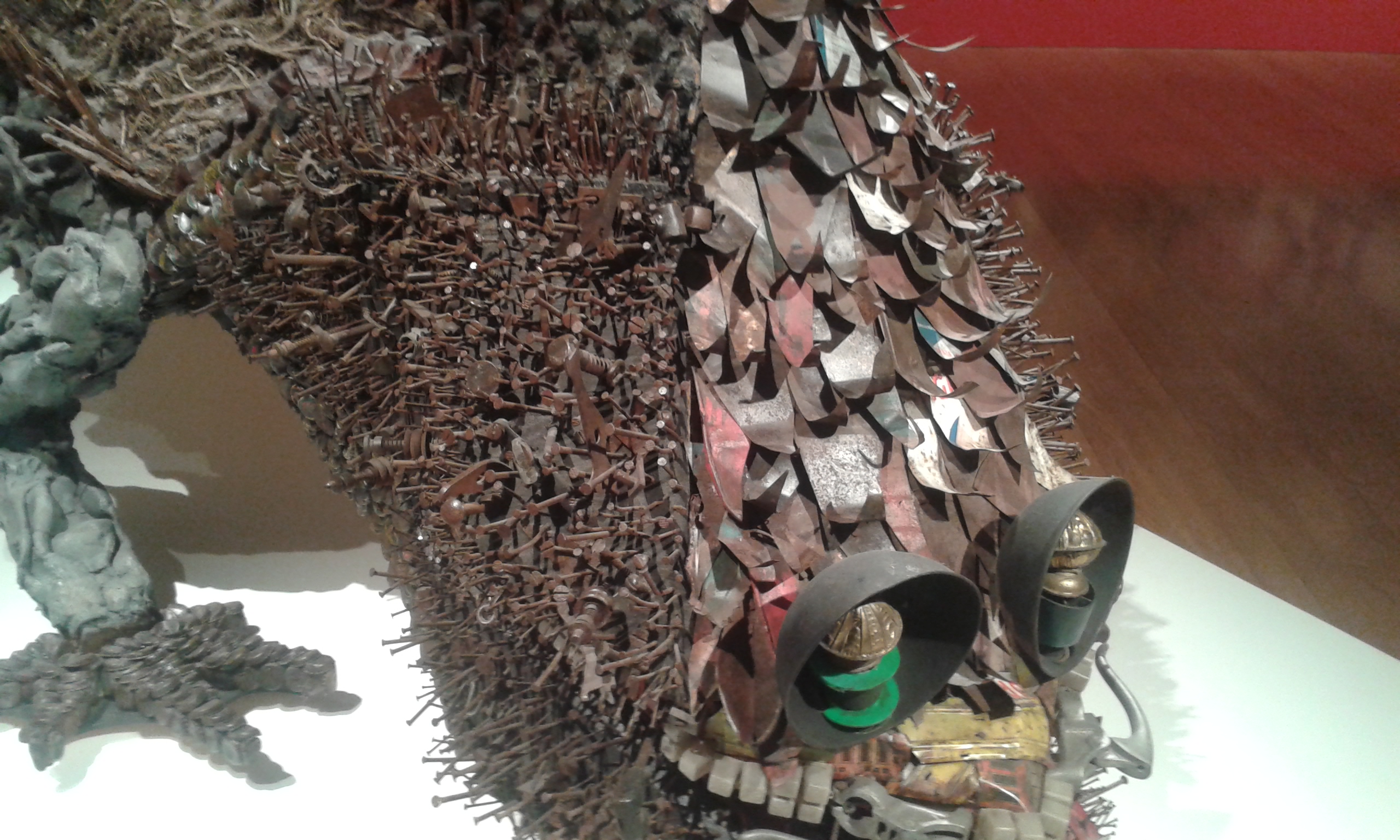
We were happy to arrive in such a lovely city. We quickly found Mitico Hostel and continued walking around the city. The art here is just overwhelming.


Our first day, we went to a restaurant and met some really lovely locals. The rest of the evening was spent with them and cervezas.
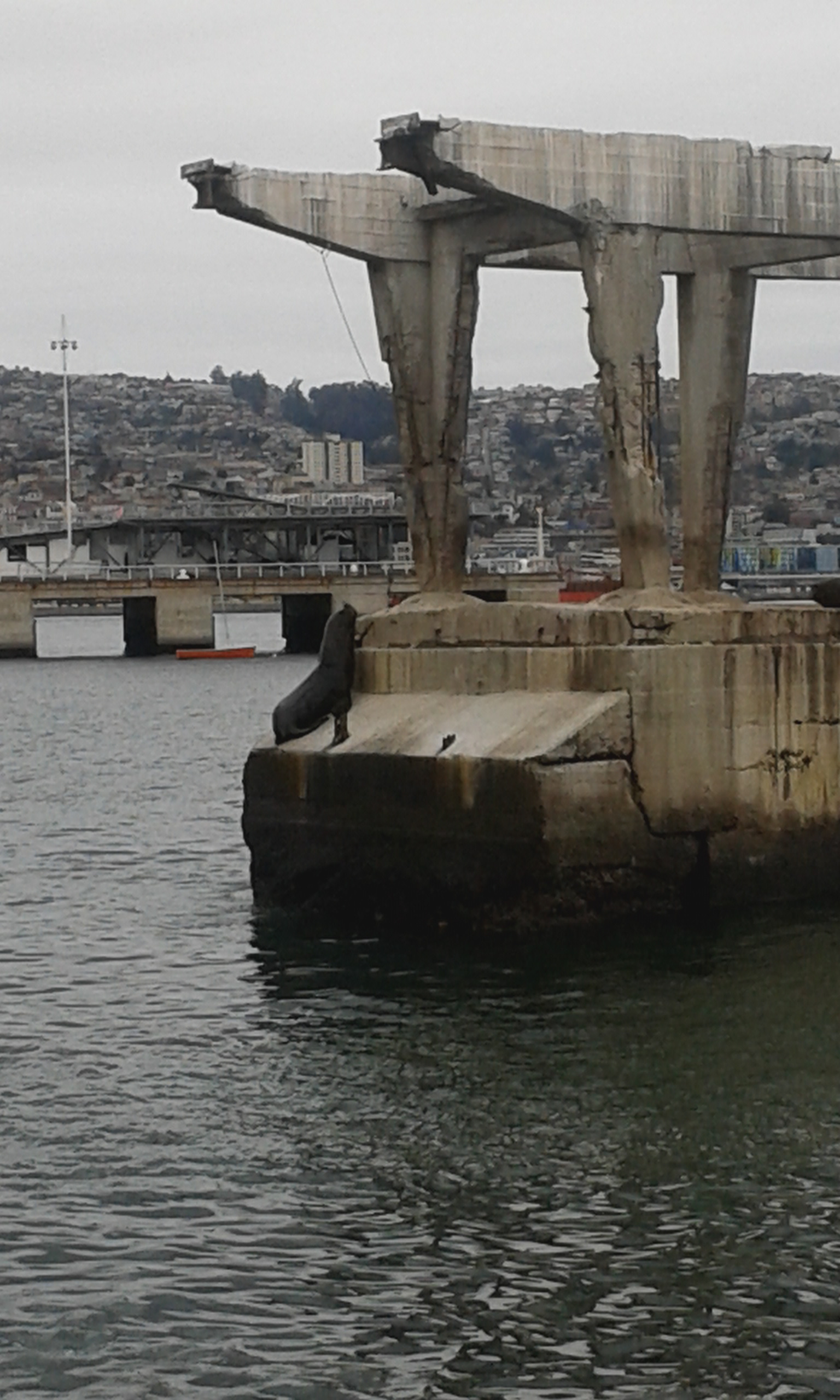
We spent 2 more days in Valparaiso enjoying the art, food, beach, and sea lions. They were better to watch than tv.
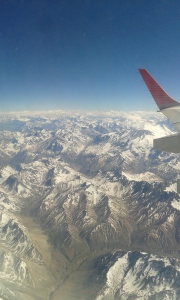
Onward towards Santiago to catch a plane to Buenos Aires! The flight, with a beautiful view over the Andes, took two hours and we landed in Argentina!

Thankfully, we had already paid the $160 reciprocity fee ahead of time so customs was a breeze. We snagged a cab from the airport to Urbano Ranchero hostel and checked in.
Ding, ding, ding. We have a winner, folks. Urbano Ranchero won the award for worst hostel. Small rooms, dingy area, and visible bed bugs. We were quickly searching for a new spot.
While on the hunt, we looked for a place to exchange our American currency for Argentinean pesos. Thankfully, we had thought ahead and brought USD. The official exchange rate is 7.5 pesos to 1 USD. The black market rate (at that time) was 13 pesos to 1 USD. Pack some extra dollars when visiting Argentina! Note: Avenida Florida is the most popular place to change currency. Just find one of the many people shouting “cambio.” As always, know the current rate and look for the best deal.
We got our cash changed, hilariously, at a cash for gold office and continued on our way. We researched a hostel online and took the metro across the city to find it. We booked at Che Lagarto hostel and hoped for the best. In the morning, we made the switch.
We ended up staying a week in total at Che Lagarto. Ahh, Buenos Aires, what a beautiful city. With fantastic food. We binged on empanadas, milanesa (read: huge breaded tenderloins), and lots of steak. One place so tender they cut it with a spoon.
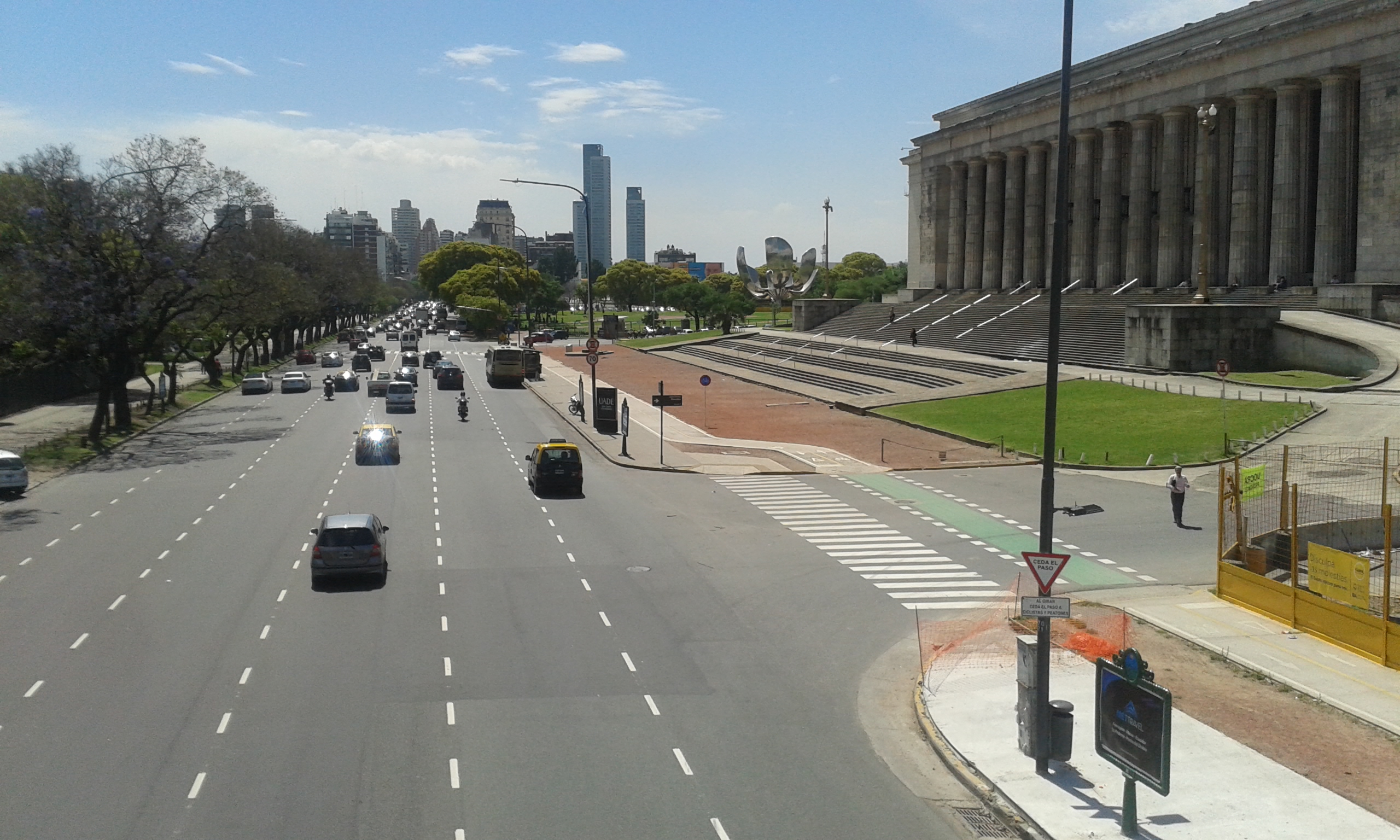
We enjoyed walking down the popular Avenida Florida several times and enjoyed catching some tango street performance. Beautiful. We also saw plenty of art, crafts, and handmade jewelry.

The last day of our stay we went across the city to explore two art museums. When we returned, our friends at the hostel threw us an “asado” where we ate copious amounts of steaks and sausages with a bottle of Argentinean wine and plenty of beer.
Buenos Aires, you win for my favorite city. Nice, beautiful people, que rica comida, lovely architecture, good transit. Can’t wait to come back.
We left Thursday morning to the airport to catch our plane back to Santiago. When we arrived there were people and camera crews everywhere, long messes of lines, and overall confusion. Our questions were soon answered and apparently there had been a strike which cancelled all planes before 10 am. Our flight was at 10:40 am. Sweet! Always schedule extra time for struggling.
After a short delay, we were back in Santiago. With only 5 days left before our final flight to The States, we decided to head back to Valparaiso. Another of my favorite cities we visited. As pictured above, the quality and quantity of art is just astounding.
Upon returning, we went back to Mitico Hostel which we really enjoyed. We decided to reconnect with a local friend, Luis, who kindly took out of for dinner. This time a small lit grill arrived at the table covered with a mountain of chicken, steak, pork, and sausage. And plenty of Heineken.
The next day, Luis guided us around Viña del Mar nearby. We had delicious, fresh ceviche and other seafood at the market. We also spent time shopping for a few last treasures to bring home.
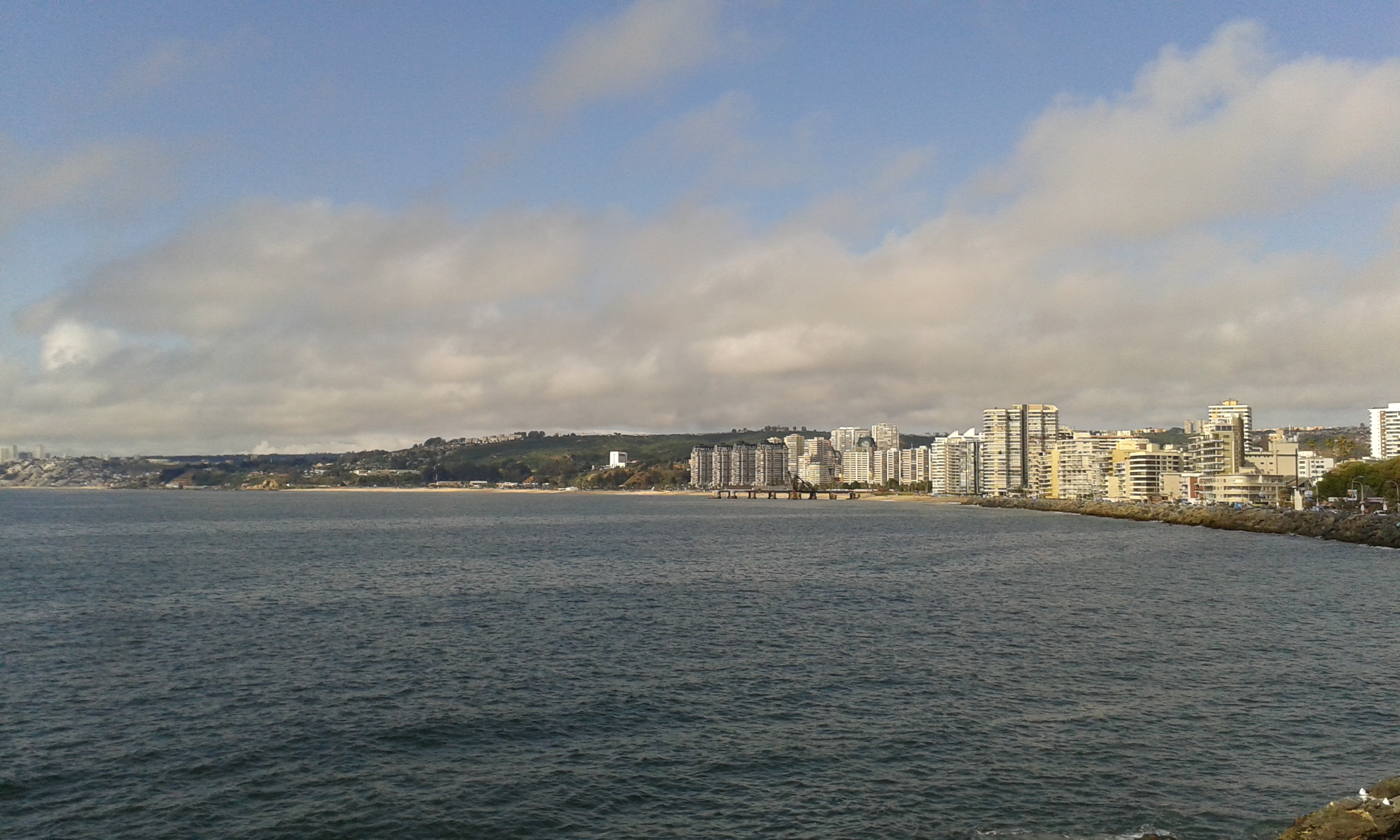
That night, we met a new friend from Wisconsin, Reese, and spent our last weekend enjoying salsa clubs and good food accompanied by Luis, and Rene, another local friend we encountered on our first visit.
It’s crazy to say it, but our last day had finally come. We did a little bit more shopping and had a final beer with Luis. We took a bus to Santiago and then a last ride to the airport.
Our flight was slightly delayed, but soon we were off. On one of the biggest planes I’ve ever been on. LAN airlines blew me away. Every seat had a personal touch screen movie player on the seat in front of them full of movie and tv choices. Dinner was quite tasty and included free wine. With refills. There was also after dinner whiskey available and beer. Turn down for what?
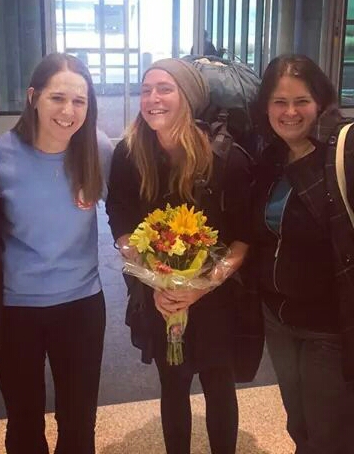
Well, at about 5 am we arrived in Miami, passed through a relaxed customs, and checked in to our final flights in different directions. Big hugs. Big thanks, C!
After a year of planning, 5 months of traveling, countless hours in buses, boats, planes, hiking, snorkeling, sailing, climbing, touring, struggling, and 13 countries, I am back home. Happy, ready to see what’s next.
I’m really stunned at how fast it flew and loved watching the journey create it’s own shape. I’ll have a couple more posts including my sappy review and, also, a financial summary for all you future travellers out there.
Thanks for following Loki’s Travels. I think it’s just the first chapter in a very adventurous book…

Puno and Arequipa
Leaving Cusco, we took the overnight bus to Puno which arrived at about 4 am. We killed a couple hours at the bus terminal and grabbed a cab to Bothy Hostel we saw online. They graciously allowed us an early check in and we got a little rest.
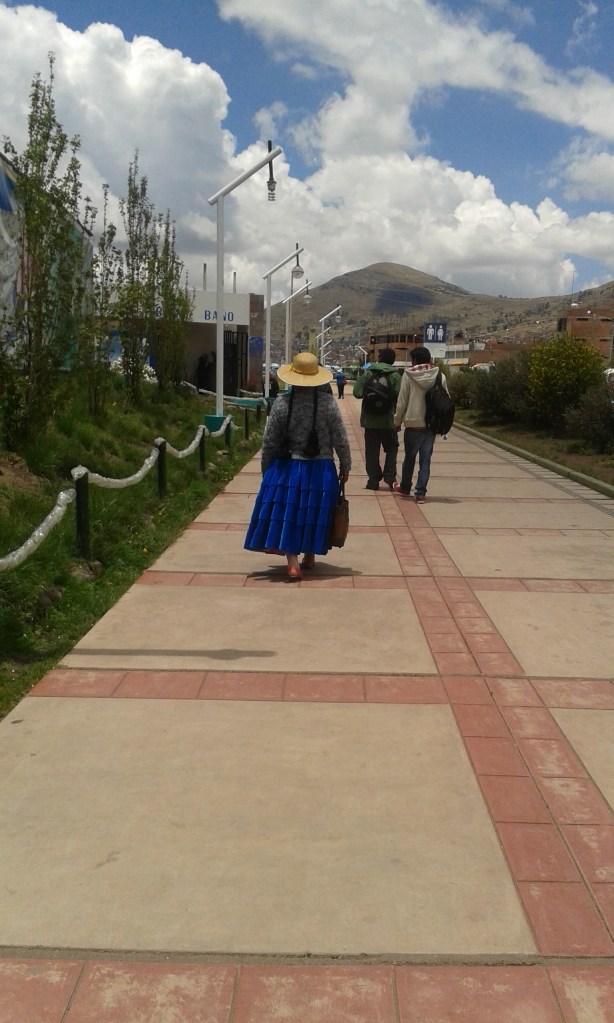
That afternoon, we went out for lunch and got caught in rain and hail. We grabbed some snacks and decided to take advantage of the hostel’s movie room. Tv was kind to us, and we happily watched Toy Story and Harry Potter in Spanish, of course. Counts as a lesson, right? “A infinitivo, y mas alla!”
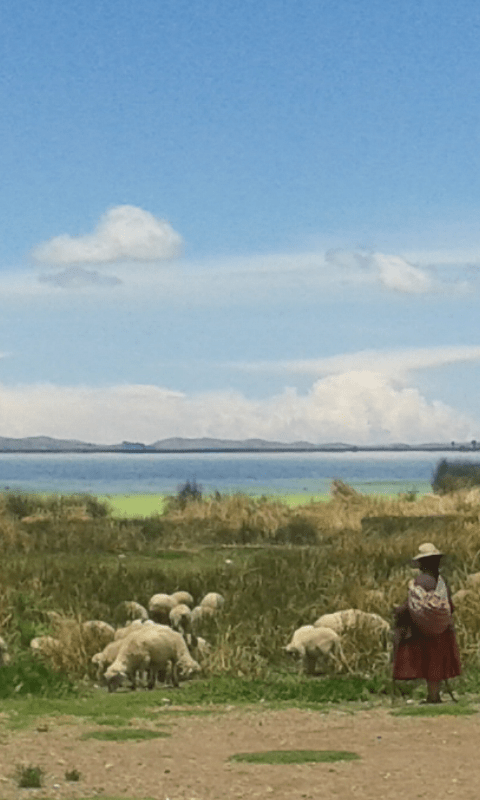
The next day was full of sunshine, and we made the ten minute walk to Lake Titicaca.

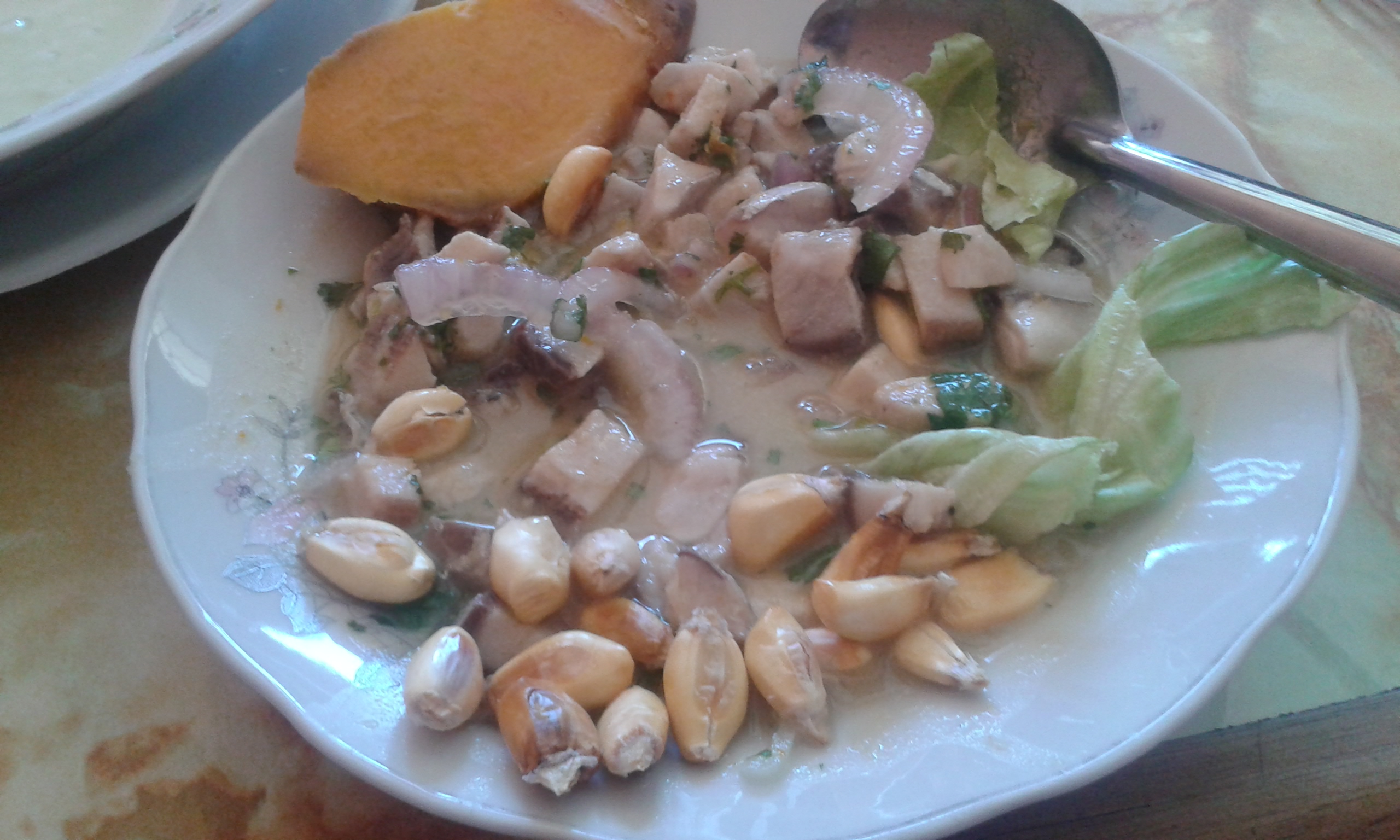
Puno doesn’t really have much in terms of attraction other than the lake. And really cheap food. We enjoyed ceviche for lunch for about $1.
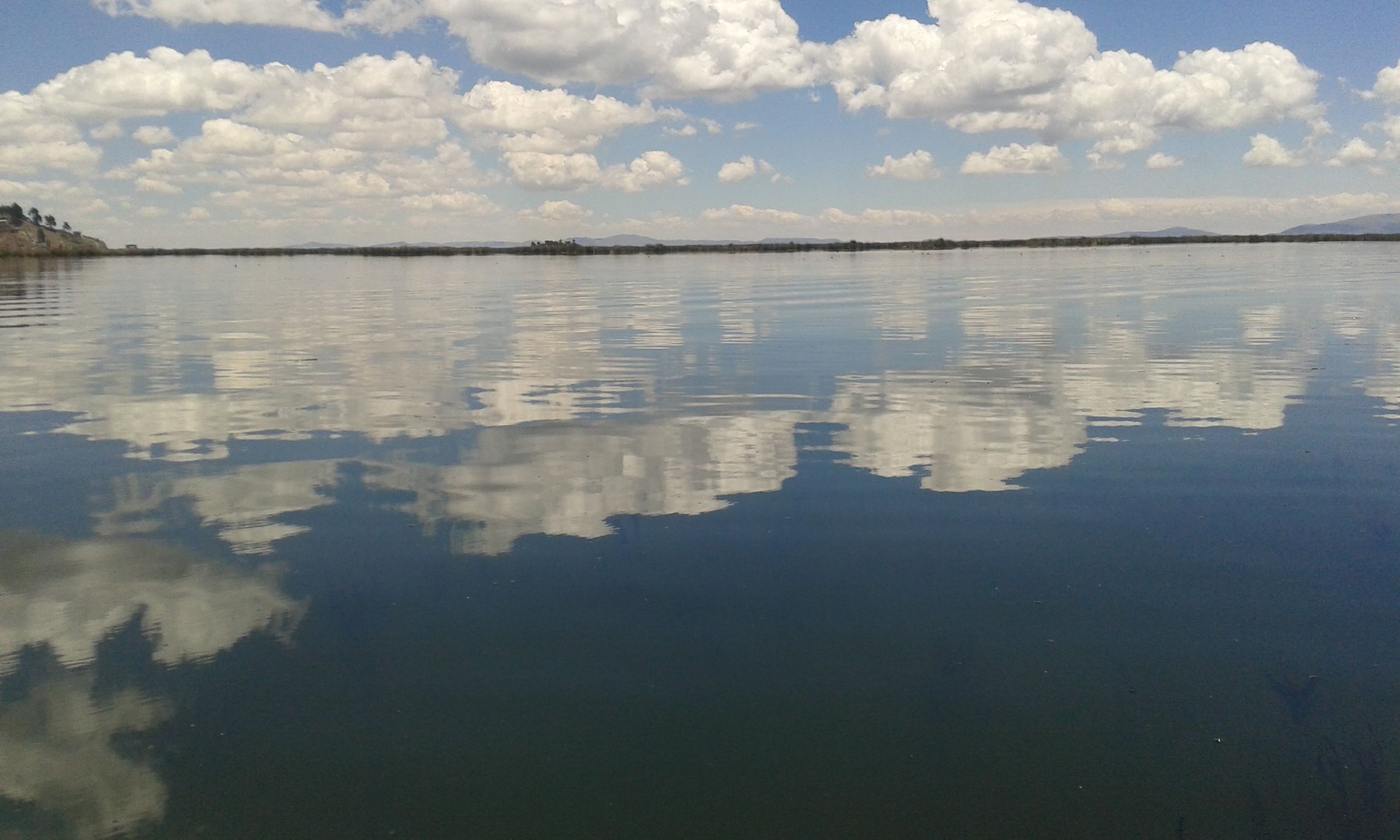
The next day, we considered taking the tour to the floating islands but didn’t love the tour packages options. We instead opted for hiring a small private boat to just take us on a lake stroll.

We ended the lake tour at a boat museum. This large boat was brought in piece by piece shipped from London to Lima and hauled by donkey over the Andes to Lake Titicaca. Amazing.

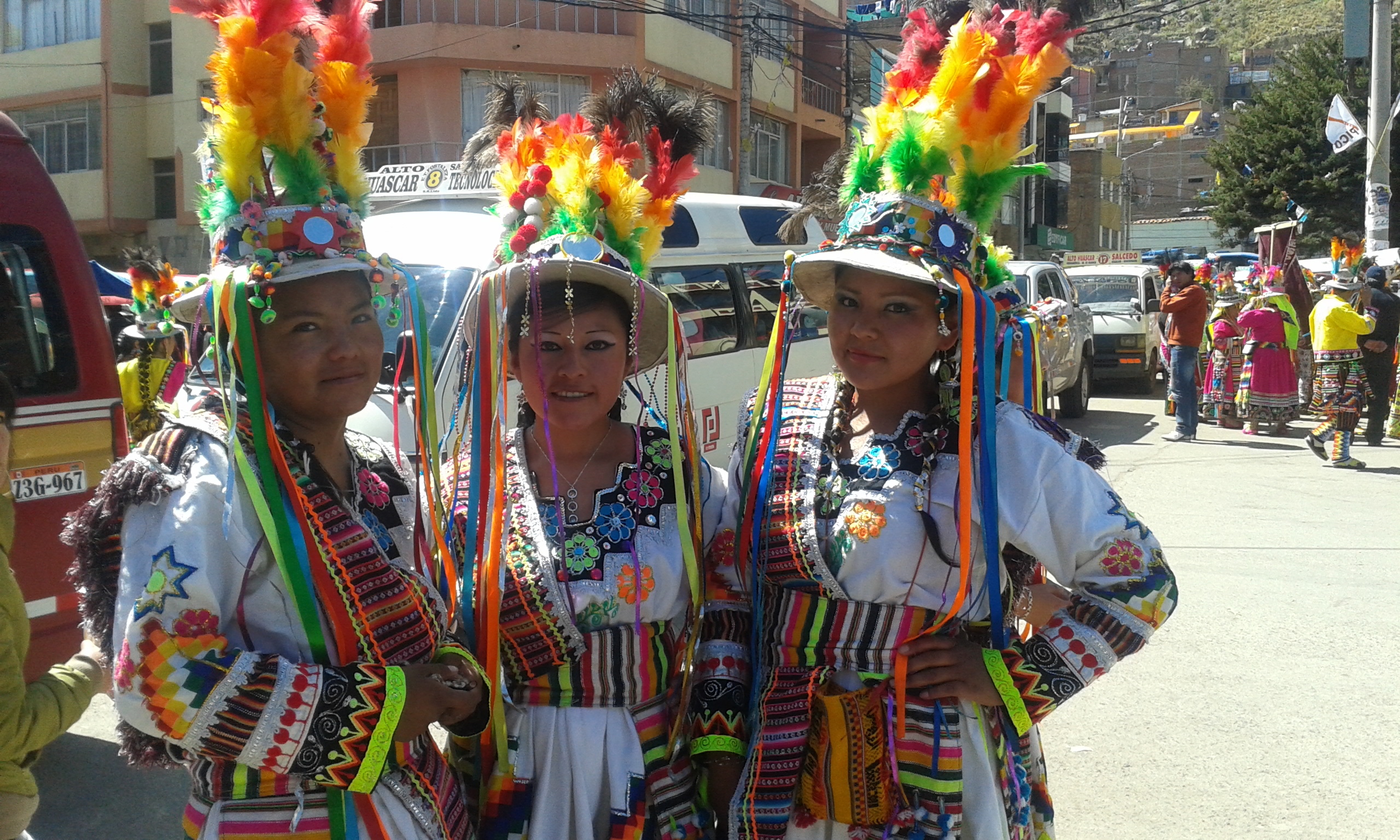
That afternoon we unintentionally landed in a parade! We were in awe of the intricate costumes.

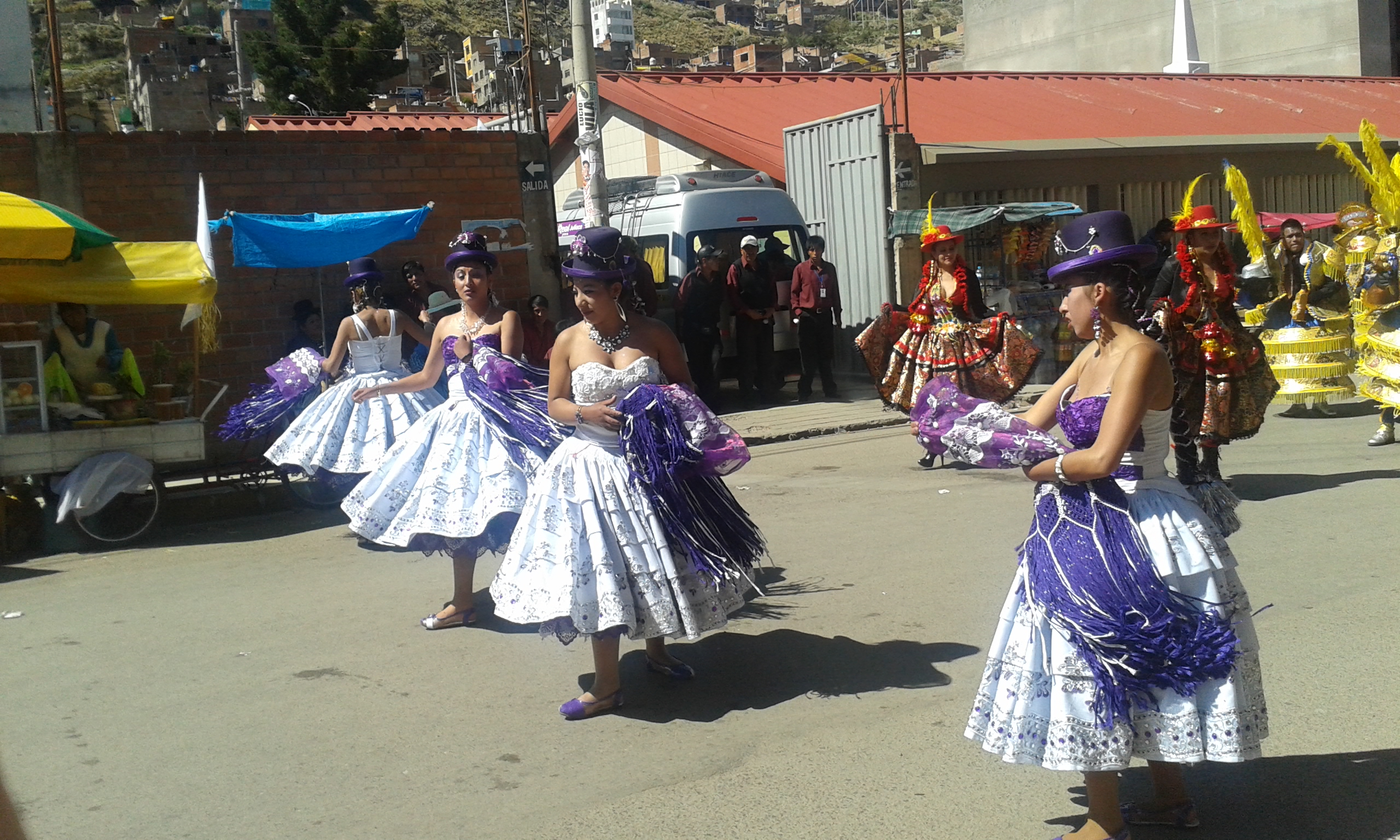
That evening, we took a night bus from Puno to Arequipa. We were happy to be back in warm weather!
We took a cab to a hostel and checked in. We didn’t love it there (especially with a lack of kitchen), so we switched hostels the next day and inadvertently spent 2 weeks in the city. Easy to do in a cheap city surrounded by mountains and every day is 70° and sunny.

Surprisingly, Santa Catalina Hostel has been the best bang for its buck hostel that we have encountered on the trip. S / 20 each for a private room, shared kitchen, shared bathroom with HOT water, functioning Wi-Fi…
We’ve been taking our days real easy in this city. Lots of reading, sleeping, beers. We even got adventurous and cooked up some coy… that’s guinea pig. It wasn’t very good…

On Halloween, we did the appropriate thing by visiting Juanita, a five hundred year old Inca mummy. The ice princess was an Inca sacrifice slain in the Andes as an offer to the gods.
We haven’t been doing… much… which has been pretty wonderful after a lot of traveling.
Well, eventually, we broke our streak and decided to head South. We’ve got a little over a month left and very few plans. Let’s see where the road takes us…
We’re off.

Cusco and The Inca Trail

Early Saturday morning, we got up and took a bus to the Iquitos airport. We checked into our previously booked flight and boarded our first plane to Lima. (Tip: Don’t prebook your flight online. This is one instance where you will save a lot of money by buying your plane ticket in Iquitos. We saw prices advertised for about $60 to Lima and an additional $60 to Cusco.)
We had a quick layover in Lima and boarded our next plane to Cusco. Our Inca Trail reservation incuded an airport pickup so we took advantage of that and got dropped off at a hostel we picked out online. We checked into the VIP House hostel and went to explore the city.
Our trek would start early Tuesday morning so we had 3 days to acclimate (Cusco is at 3400 meters) and relax. Sunday evening we met up with our Canadian friends we met in the jungle for a drink. Mmm pisco sours. Equal parts dangerous and delicious.


Monday we decided to get some food at the market and have a little picnic in a downtown Cusco park. The weather was perfect with beautiful mountain views. As evening approached, we made our way towards the tour agency office for a debriefing of the four day trek that would start the next day. We were anticipating meeting the rest of our group and were surprised when the meeting began with only us and the guide present. Apparantly, we were supposed to be a group of five, but one person just didn’t show up and two others were fighting altitude sickness.

Our guide gave us a rundown on how the next four days would go. We were awfully excited to begin the trek the next day. After sorting our bags, I went to bed unable to sleep like a kid on Christmas.
Early the next morning, we were picked up by our guide accompanied by 3 porters. Somehow, we just got a private group on the Inca Trail. Sidenote – although we were the only 2 in our group, there were lots of groups on the trail at the same time.
We took a van a couple hours to Ollantaytambo, then a little further toward km 83 where we began walking. After about 2 hours of walking, it was already lunch time, and the porters made the first of our amazing meals. After lunch, we made our way for about 4 more hours before we stopped for the evening. Along the trail, we saw a few ruins sites all with a stunning backdrop of the Andes. We settled in for the night in our tent and prepared for an early morning.

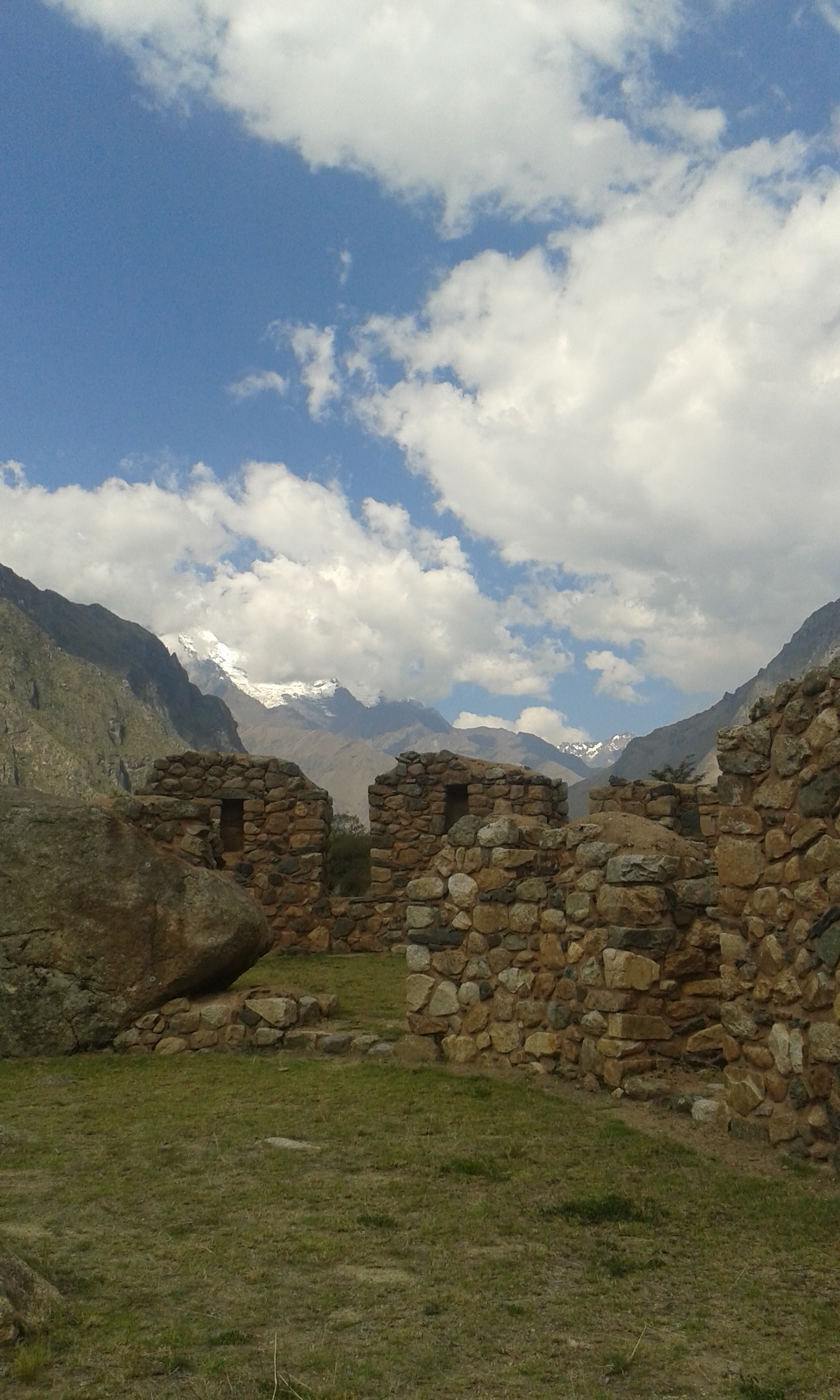
The next day, we were awoken by the porters offering us coca tea at about 5:30 am. We had tea and breakfast and began to make our way. Day 2, we had been warned, was the most difficult day of the hike where we would ascend to 4200 meters. With amazing vistas in all directions, we climbed stair after stair after stair for about 4 hours. The pass was only made more difficult by the altitude and thin air. Once we finally reached the top, we rested for a bit in the cool air cheering on other climbers as they finished the difficult ascent.
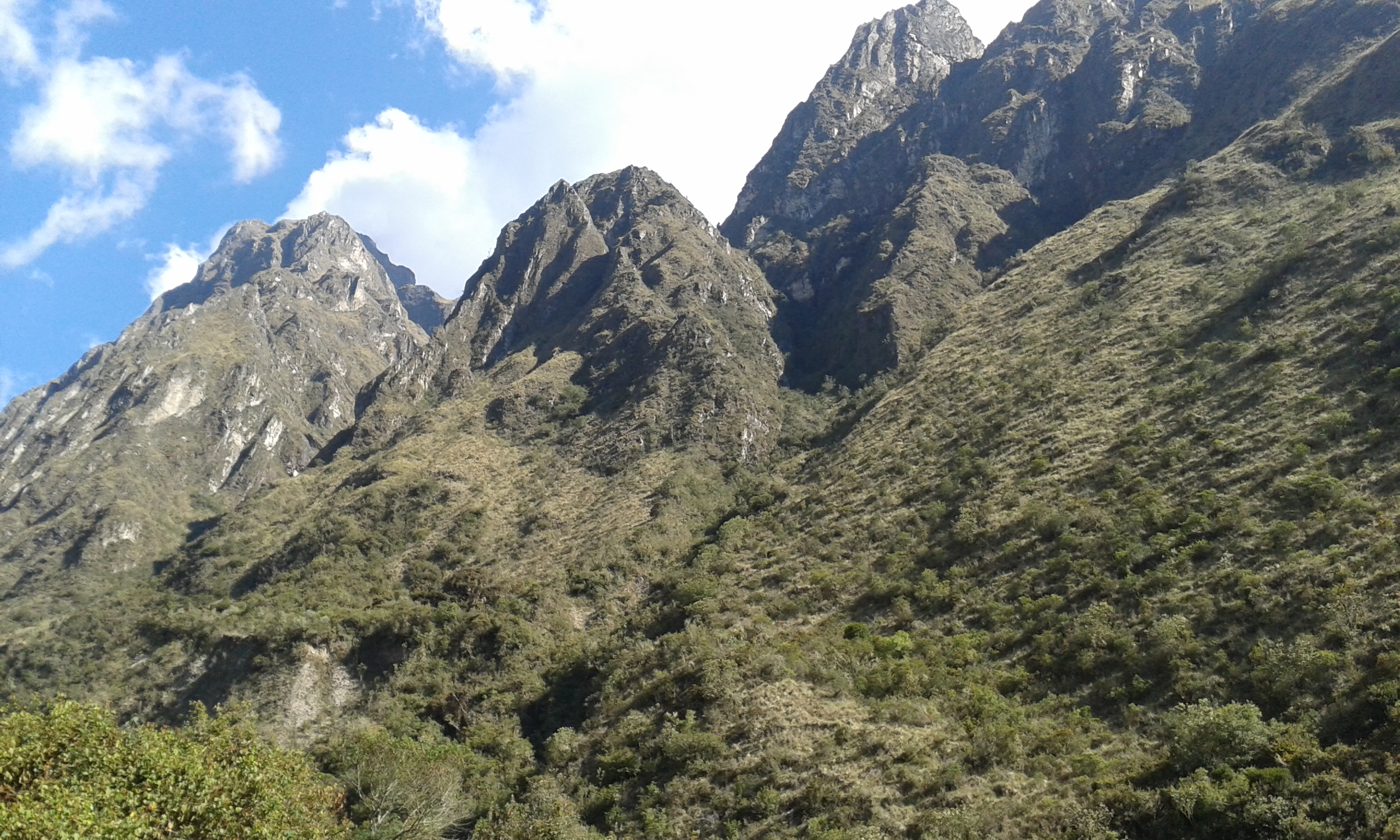
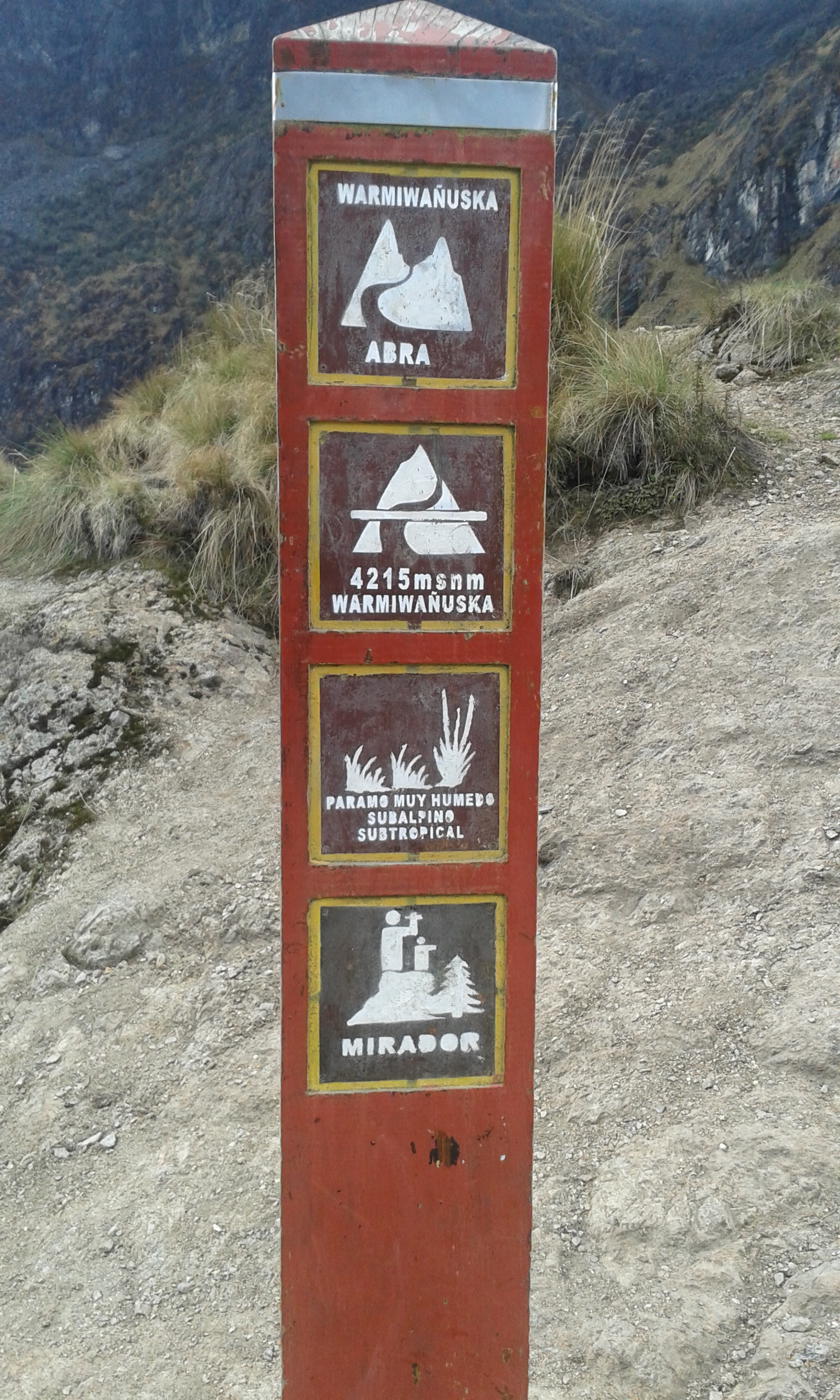

What goes up, must come down. Down we went for about 2 hours until we came to the next campsite. The view out of our tent was magnificent. We took and afternoon nap and filled up on another huge meal from the porters.

Wow, those porters. Every group also had a group of porters. These locals carry up to 20 kg (legally, I know some carry more) in their packs. They haul food, stoves, gasoline, kitchen tents, camping tents, chairs, tables, etc. They leave the campsite after you, literally running up these mountains, arrive at the next campsite before you and start cooking. We learned the cooks are required to attend cooking classes before being able to become a cook. Their jobs are beyond impressive. If you need to, you can hire a porter to carry your personal items as well. We didn’t, but it seemed that we were among the few carrying all of our personal items.

We finished day 2 early feeling exhausted and a bit sore. The clear skies led to fabulous star gazing. We went to bed early, preparing for a long day 3.
We were awoken again by the porters with coca tea at about 5:30 am. We began the day with about an hour of climbing more stairs. During this walk, we saw a lagoon and more ruins.

After a quick break, we continued on our way to another ruins location, this one being one of the largest we had seen so far.

After a little exploration and explanation, we walked to lunch location. After lunch, we had an amazing few hours, mostly in solitude, while gently climbing up the mountain. The views on either side were simply stunning.

Eventually, we came to another larger ruins sight. After an explanation, we began a large descent. The walk was beautiful, but the stairs were quite steep.

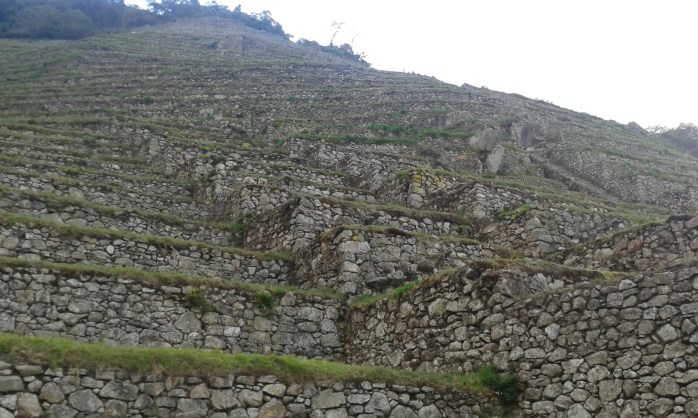
The plateaus of ruins in the distance soon began to grow as we approached. We took a rest and took in the views of the mountains. The river we could see below was flowing from Lake Titicaca towards the Amazon as it made its way to the Atlantic. We could see Machu Picchu Mountain in the distance. The site was a few hours away.

We made our way to the campsite and had a final, huge meal prepared by the porters. We again went to bed early and prepared to be awoken at about 4:30 am.
Early the next morning, we had a quick cup of tea and received a box lunch. We said goodbye to the porters and we started walking. The walk was quite abruptly stopped as we had to wait on a final checkpoint to open. After the wait, we began the final hour and a half of the trail. The sun was rising and everyone was very excited to see Machu Picchu. We scurried around the mountain up and down stairs. Some people pushing their way in anticipation. Eventually, we were rewarded.

The Inca Trail finishes at the Sun Gate. In the morning, the sun pours through the gate, and it was quite a treat to see the sun shine down on Machu Picchu. After the last three strenuous days, the hike was almost to an end. We enjoyed our time viewing the site from above and eventually made our way down to explore the ruins.

The procedure is a bit strange as you must exit the ruins, go through ticketing, and return to the site, but so be it. We made our way back in and our guide took us through Machu Picchu.


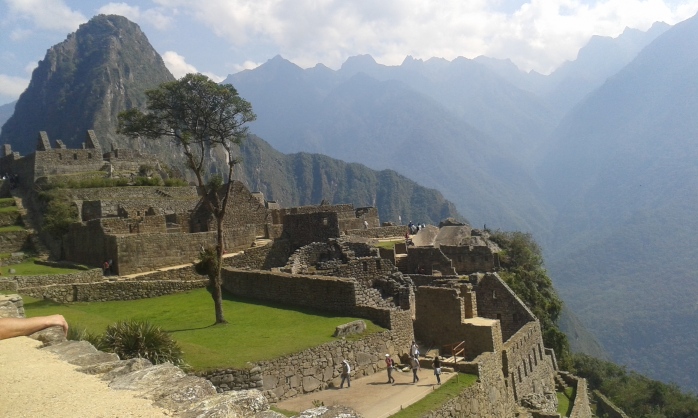
Wow. There are a ton of people there. And the site is much bigger than the classic photo makes it out to be. Machu Picchu did not fail to impress, but I highly recommend taking a trek (there are many options) as opposed to just visiting the site. To me, the experience trekking in was more impressive than the site itself.

Feeling pretty exhausted from trekking, Claudia and I made our way to the town at the base of the mountain, Aguas Calientes, pretty early. Our train (booked through our tour) wouldn’t leave for Ollantaytambo until 6:30 giving us plenty of time to spare.
We took the bus down and decided to reward ourselves with pisco sours. Never a bad idea. After lunch, we ventured to find the natural hot springs to soak in. Hot might be an overstatement, but we enjoyed the warm springs anyway.
After a couple hours, we made our way towards the train station. The two hour train back was filled with laughs as we met 2 Brits who were just as sleep deprived as we were. We also spotted a line of fire going down the mountain out of the window. Totally bizarre, I’ll probably never know what that was all about.
When we arrived in Ollantaytambo, there was a woman waiting holding a sign with my name on it. We boarded a bus that would take an additional 2 hours back to Cusco. When we finally arrived back at our hostel, we collapsed and slept like rocks.
After returning on Friday night, we spent an additional three nights in Cusco relaxing and enjoying the city. Though full of tourists, the downtown area is comfortable, safe, and full of restaurants, bars, and crafts. We really enjoyed the vibe of Cusco, but it was time to press on.
We’re off.
Iquitos and The Amazon
Iquitos. Well, that place was weird.
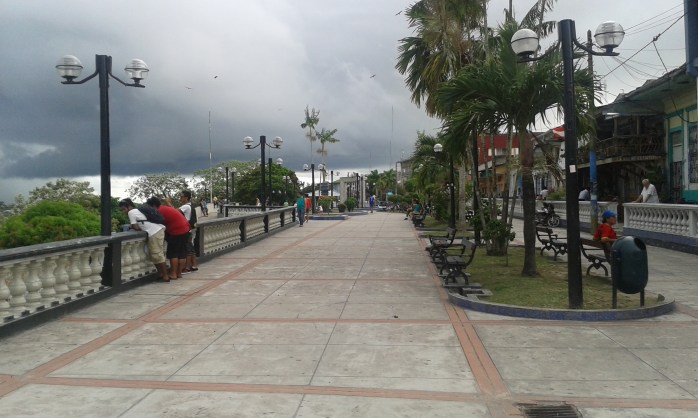
And why wouldn’t it be? 400,000+ people living in a city not connected to the outside world by roads? Recipe for strange.
Our sixth and final boat brought us to one of the many crowded ports in Iquitos. There were countless boats of all shapes, sizes, and qualities. These people gotta eat, right?
Our group of seven exited the boat, a little unsure of the next step, and took mototaxis toward the downtown area in search of a hostel.

We stopped, consulted Christina’s Lonely Planet, waited, asked around, waited some more. I think it was about an hour before we were greeted by a hostel owner who advertised S 15 each with space for 7. Sold.
We were graciously allowed to check in at 8 am and were thrilled to shower, nap, and eat some non boat food (which was questionable at best).
Our first night, we enjoyed good food and beer while entertaining the idea of jungle tours.
There is no shortage of tour companies in Iquitos. In fact, we learned pretty quickly that Iquitos is quite the tourist city. Many people from all over the world come here just to see the Peruvian Amazon and leave. Iquitos is also the home of ayhuasca. Everyone is talking about it.
*Pro tip – don’t book your jungle tour in advance online. You’ll end up paying 2-3 times more.
*Try to research your ayhuasca retreat and shaman as much as possible beforehand. Many people are just trying to make a buck.

Our first night we met Mike (ya, that’s not his real name), a tour operator and owner. We ended up nicknaming him “free drinks” because that seedy character was all he really meant to us. Mike talked for far too long about his tour company, over free drinks, and the group managed to break off and went to bed early.

The next few days passed similarly. Many people arranged jungle tours and eventually Claudia and I were left just the two of us. We continued to run into Mike and his jungle tour was offered cheaper and cheaper. We had time, so why not?
We booked a 4 day, 3 night jungle tour that was really… I want to say beautiful but I’ll add, again, strange.
The website for this company offers 3 day, 2 night tours for $270 (all inclusive) per person. I’ll just say, we paid significantly less than this.
The first day, we took a van about 2 hours to Nauta. From there, we took a boat another 2 hours into the Payaca-Simiria Reserva. This company, like many others, had a jungle lodge where we unloaded our bags and provisions for the next few days.
Our current group consisted of 3 Canadian guys (Kan, Hanspal, and Chester), the 2 of us, Kale, an Australian girl, and Everton, a Brazilian on his first jungle tour as a volunteer with Mike’s company.
After a late lunch, we went to a small village. One of the families there housed two pet sloths.
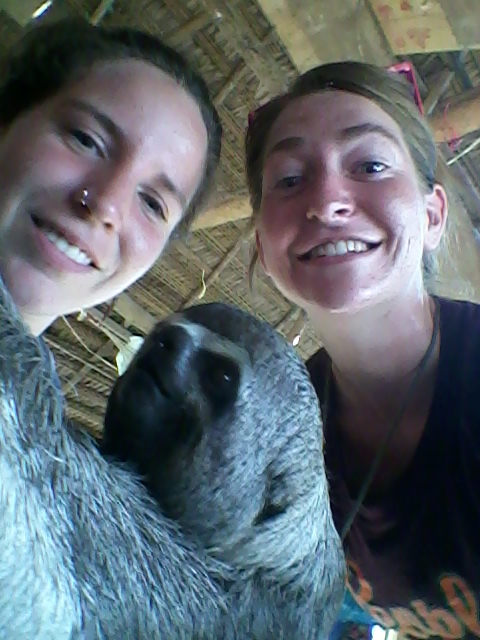
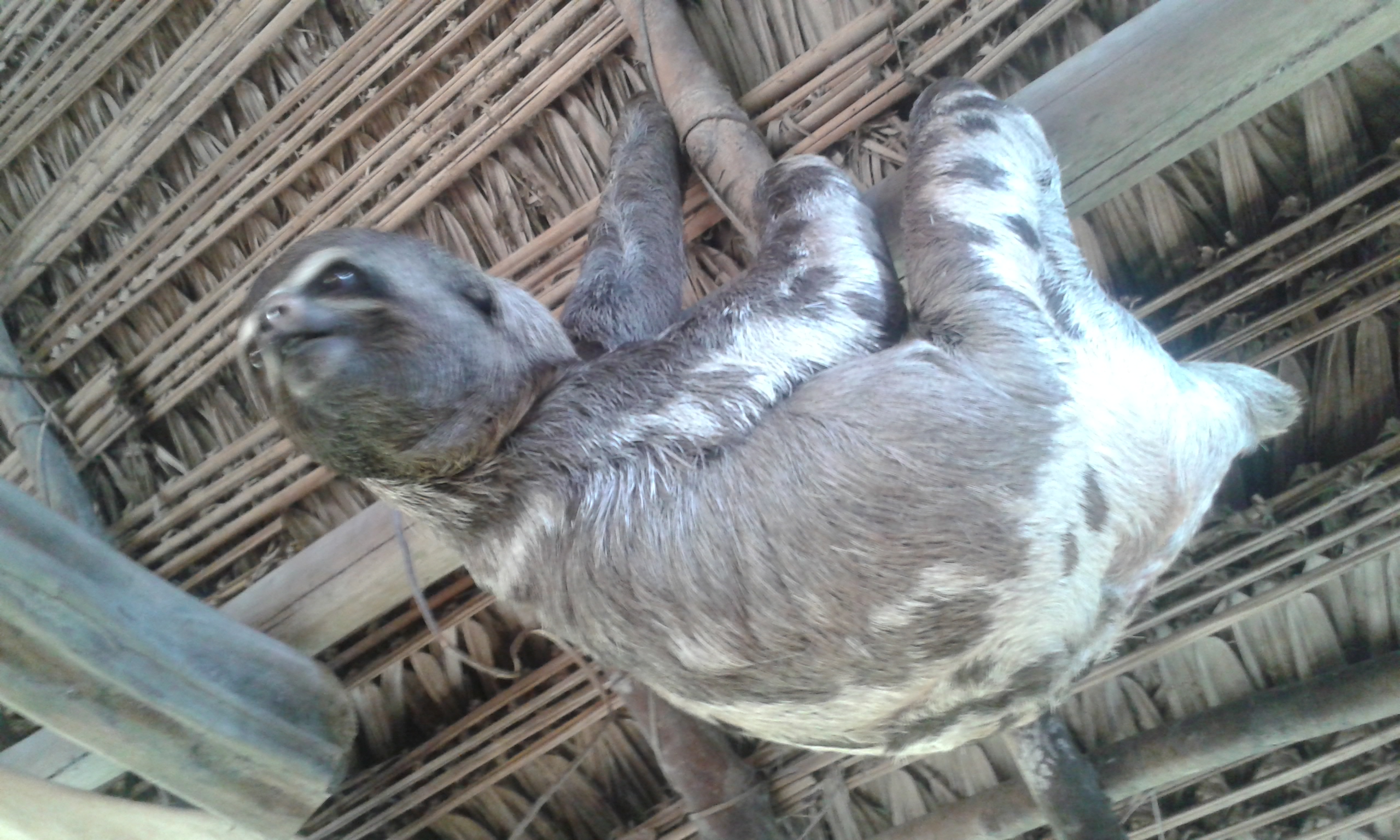
After sloth sitting, we went to see the Amazon dolphins.

At the lodge, we had another big meal and the witching hour dawned. Mosquitos. Pretty fierce in the Amazon. And in mass quantity. The couple hours after dusk were trying every night.
The next morning, we woke up early and took a boat down the river to do some bird watching. For me, the birds were my favorite part of the jungle. Not only were they beautiful in every shape and color, they were the orchestra of the jungle. Non-stop music.
After birdwatching and breakfast, we went for a group jungle hike. Our guide pointed out many medicinal plants. We viewed trees whose barks’ were used for stomach aches, head aches, mosquito repellent, etc.
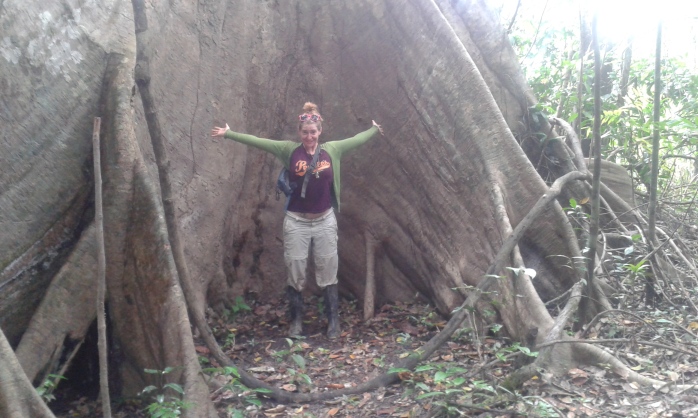
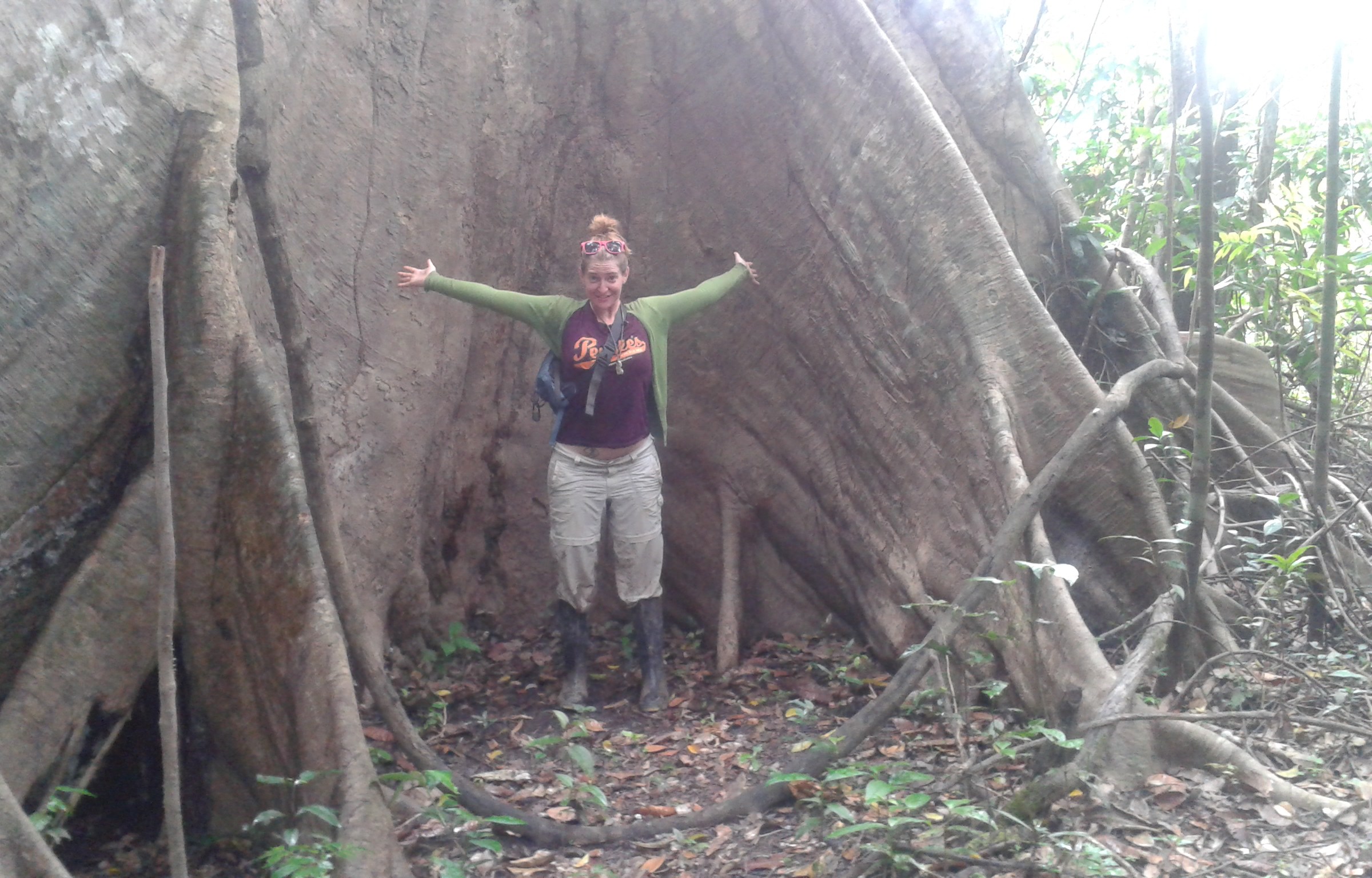
We returned for another huge meal, a quick nap, and then we geared up for another hike. This time we walked through jungle swamps. We saw giant, gorgeous trees with exposed root systems.

We were in deep mud and were warned against grabbing the trees for stability.

The hike ended at a lagoon. Giant lily pads with elegant purple lotus flowers floated gracefully across the surface. Wow.

After dinner, we retreated to the mosquito nets surrounding our beds to escape the witching hour.
The next morning, we said goodbye to the Canadian gents and welcomed Matt, USA, and three ladies from The Netherlands. We began, again, with another boat ride for bird watching and also visited Monkey Island.
After a big breakfast, we took another hike through the jungle. During this walk, we saw a large black and yellow snake slithering through the jungle. Our guide, with the help of Kale, caught the six foot snake and brought him back to the lodge to show off.
We had lunch and watched rain fall while the sun still beamed brightly. After the rain, we took the boat to view the playful dolphins again. The sun was out, and we were gifted a sparkling rainbow across the river complete with pink dolphins jumping up to say hello.
We had our last dinner and went to sleep to the sound of the rain. The next morning, we did a final jungle walk before packing up the boat and heading back towards Iquitos. At about 7 pm, we had made it back and checked into our hostel.

Claudia and I spent three lazy days after in Iquitos. Saturday morning, we woke up early, took a bus to the airport, and boarded our first flight together. Airplanes, how novel.
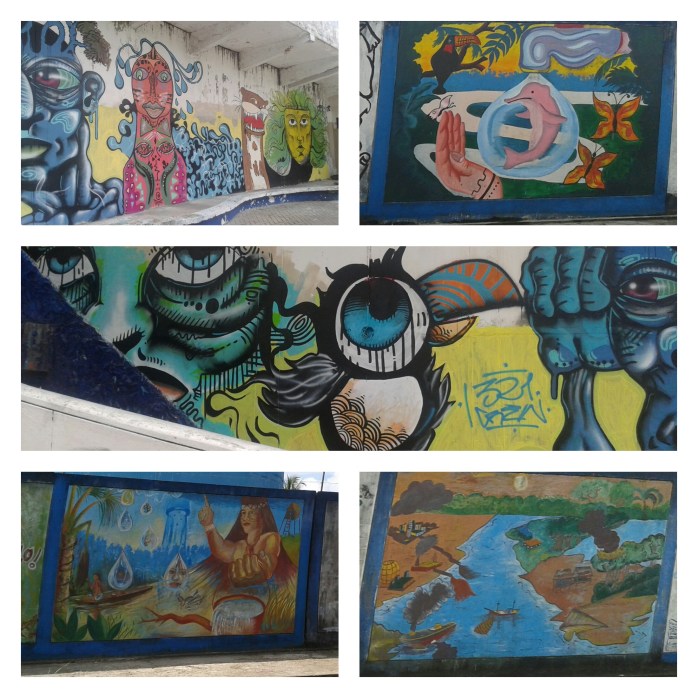
Overall, we had a good time in Iquitos and the Amazon, but the energy there is a clear reflection of the rainforest and its inhabitants. I recommend going and definitely take the boats in, out, or both!

We’re off. On a plane! What a concept!
Baños before the Rio Napo into Peru
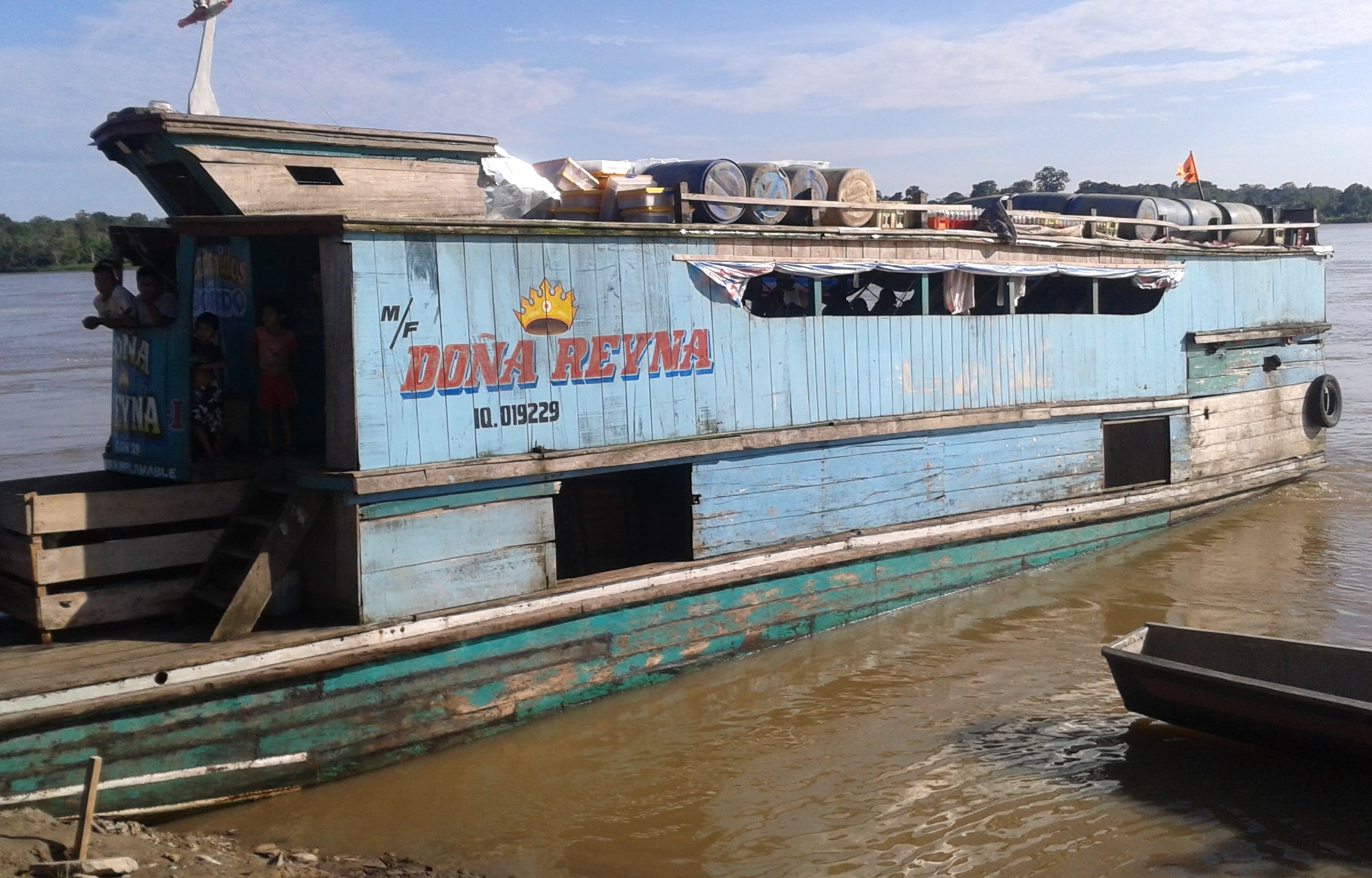
Well, the time had come to leave Salento. We took a bus to Pereira then an overnight bus from Pereira to Ipiales at the southern border with Ecuador.
We knew we didn’t have much time to spend in Ecuador, so we decided to make our way straight to Baños before we would begin our river journey into the Amazon.
The overnight bus arrived in Ipiales at about 10:30 after about a twelve hour ride through the Andes. A long, beautiful ride. We crossed the border into Ecuador, did border formalities, and took a cab to the closest bus station. From there, we got a $5 bus to Quito that was supposed to be 5 hours. After about 8 hours and a military random bus search, we swirled our way into Quito.
Upon entering the bus station, we decided to test our luck and see if we could get to Baños that evening. Perfect timing yet again! The last bus was leaving in ten minutes and we snagged tickets.
At about midnight after almost 24 hours on buses, we arrived in Baños. A hotel employee was waiting at the bus station, and we found a spot to sleep for $15 total for a private room.
The next morning, we were delighted to see the stunning views that surround this small town. After breakfast (read: instant coffee…sigh…adios Salento), we made our way towards La Casa de Arbol to the swing off the side of a mountain.
We began the climb, not really realizing the distance. After about 3 hours of walking, mostly uphill, we had arrived. The walk provided us magnificent views of the snow capped Tungurahua volcano.

After catching my breath, I was exhilarated to swing over the side of a mountain. Amazing views and truly special to watch your feet dangle over a cliff.

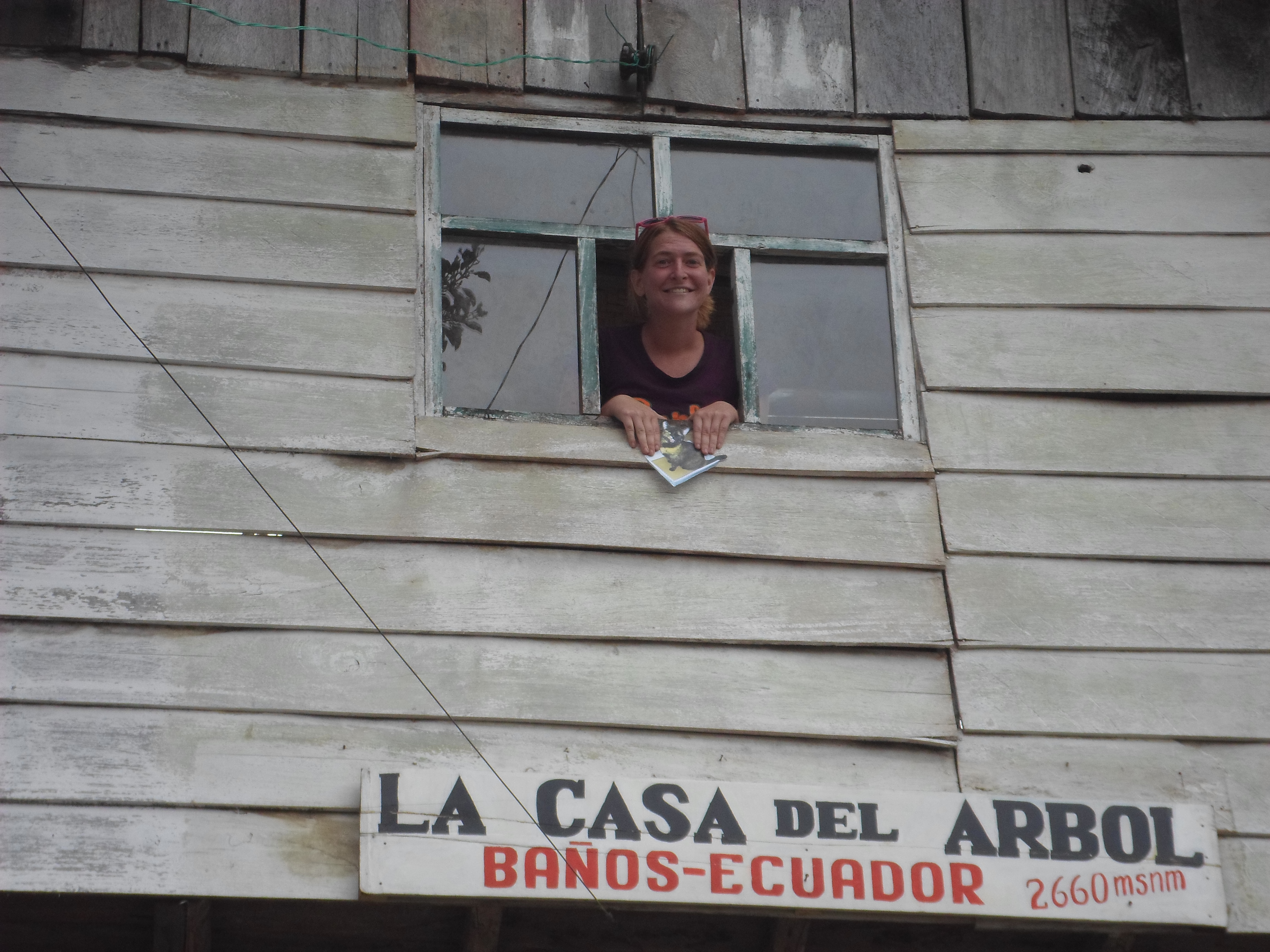
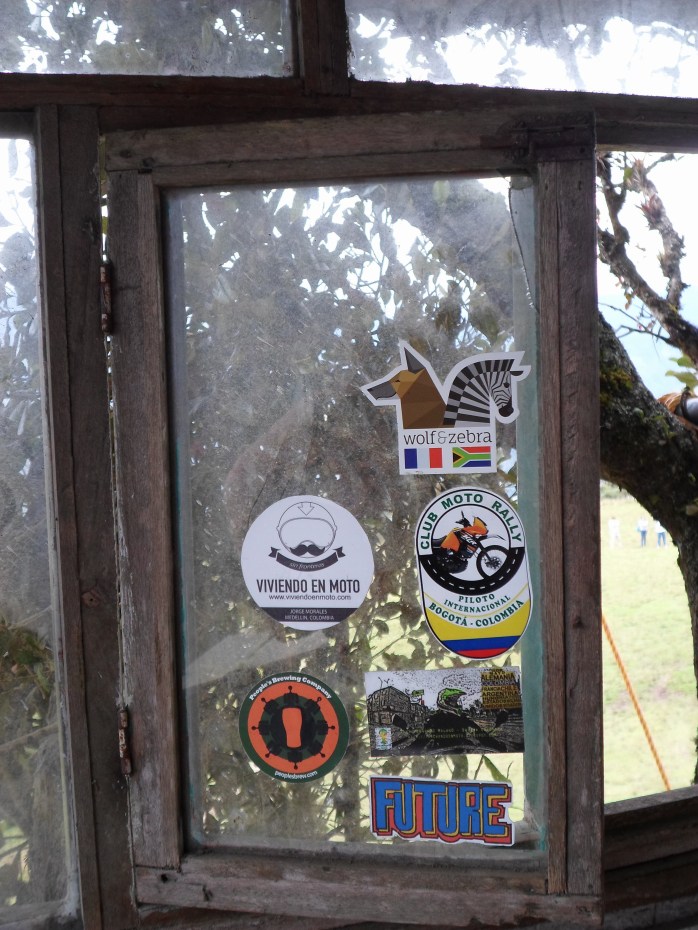
We both took turns swinging and then rewarded ourselves with a beer. We even managed to get a ride down back to Baños with a local family.
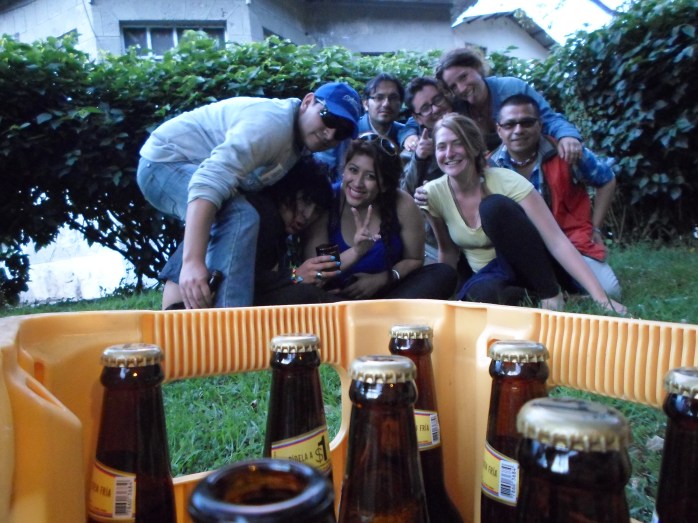
We spent two more nights in Baños relaxing and enjoying the people and the views. (Replaced my phone too 😉 ) Saturday, we were befriended by a group of locals in a park celebrating a birthday. We ended up spending the entire day with beers and dancing before we boarded a night bus from Baños to Coca.
Due to other bookings we had already made, we had three weeks to make it to Iquitos, Peru from Coca, Ecuador. From all the blogs I could get my hands on, this seemed like plenty of time. There is not much information circulating about this trip, but we were excited for a bit of adventure as we entered the Peruvian Amazon.
Sunday morning at about 4 am we arrived at the Coca bus station. We befriended a local man, who was all too energized for 4 in morning, and he offered us a ride to the boat port with his wife and brother in law, who happened to be a local tour guide.
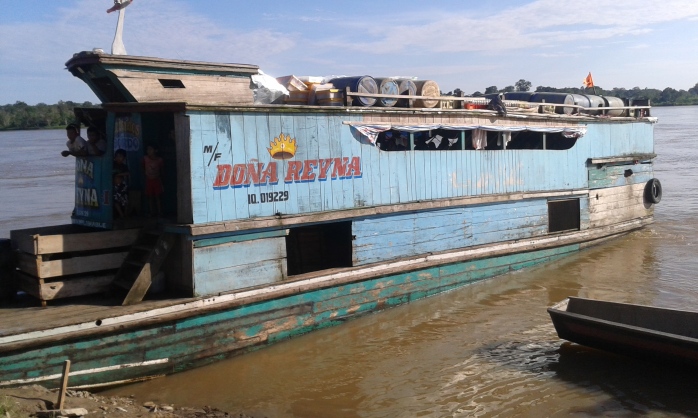
We located the port and watched the sunrise over the river. The first leg of the boat trip was from Coca to Nueva Rocafuerte for $15 each. We purchased tickets and watched the boat get filled to the brim with all types of cargo, food, people, and tons of children. We probably should have boarded sooner to avoid climbing over all of this with our large bags to our seats at the end of the long, narrow boat. There were probably 50 people on board, not including children. Maybe 15 kids.
![20140921_073452[1]](https://infinitegeography.com/wp-content/uploads/2014/10/20140921_0734521.jpg?w=698&h=419)
![20140921_140759[1]](https://infinitegeography.com/wp-content/uploads/2014/10/20140921_1407591.jpg?w=614&h=1024)
The next day, we heard word that boats to Pantoja were around $70 for the 2 hour ride. With that info, we thought we would have to wait for other travelers to arrive. After breakfast, a man offered us a ride for $50 and decided we were willing to split that three ways. The boat was about the same size as the first but with only four people on it this time.

![20140922_114603[1]](https://infinitegeography.com/wp-content/uploads/2014/10/20140922_1146031.jpg?w=698&h=419)
![20140924_165623[1]](https://infinitegeography.com/wp-content/uploads/2014/10/20140924_1656231.jpg?w=698&h=419)
The next day, we awoke to another boat arriving from Nueva Rocafuerte. This brought us 4 more travelers – Nick from England, Stephy from Italy, and Pawel (Poland) and Christina (Germany), a couple living in Ireland. We were now a group of seven heading towards Iquitos.
Typically, there is an option from Pantoja to take a 4 day boat to Mazan. When we arrived in Pantoja, we were about a week away from district elections that changed the boat schedule. Seemingly, our only option was to take a large boat leaving in two days for San Rafael, a military base, before it would branch off and head southwest away from Iquitos. From San Rafael, we would need a boat to Santa Clotilde, from there a boat to Mazan, a mototaxi across a small strip of land, and a final boat from there to Iquitos.
Well, it was still Tuesday morning, the third day of the trip, and we strung our hammocks up. The boat wouldn’t leave for another two nights so we had nothing to do but wait. The ride would cost S 35 each.
![20140923_122905[1]](https://infinitegeography.com/wp-content/uploads/2014/10/20140923_1229051.jpg?w=698&h=419)
The boat finally began to move at about 5 am Thursday morning. We went down the river for about 14 hours. At dark, we were flagged down a smaller boat who needed a tow because of the difficult night passage. This boat would end up being our transportation from San Rafael to Santa Clotilde. At about 2 am, the seven of us and a few other locals traveling to Iquitos joined us in switching from the large cargo boat to the small boat. It was pretty chilly as we settled into the four hour ride. (S 10 each)
![20140926_050915[1]](https://infinitegeography.com/wp-content/uploads/2014/10/20140926_0509151.jpg?w=698&h=419)
![20140926_044025[1]](https://infinitegeography.com/wp-content/uploads/2014/10/20140926_0440251.jpg?w=698&h=419)
![20140926_062941[1]](https://infinitegeography.com/wp-content/uploads/2014/10/20140926_0629411.jpg?w=698&h=419)
![20140926_063420[1]](https://infinitegeography.com/wp-content/uploads/2014/10/20140926_0634201.jpg?w=698&h=419)
Early the next morning, we were awoken because the boat would be taking off to Iquitos. This loop around the river takes an extra day in traveling. We opted for a mototaxi across the town (S 3 each) and a final hour boat from there to Iquitos (S 15 each). After 6 days, we made it to the biggest city in world that does not connect to the outside world by road, only boat or plane.
![Fotor_141306333037070[1]](https://infinitegeography.com/wp-content/uploads/2014/10/fotor_1413063330370701.jpg?w=698&h=698)
Coca to Nueva Rocafuerte – $15 each, 10 hours
Nueva Rocafuerte to Pantoja, Peru – $50 (negotiated from $70) split three ways, 2 hours
Pantoja to San Rafael – 35 Soles each (meals included) 3 nights
San Rafael to Santa Clotilde – S 10 each, 4 hours
Santa Clotilde to Mazan – S 35, 12 hours (option S 80, 6 hours)
Mazan mototaxi – S 3 each, 20 minutes
Mazan to Iquitos – S 15 each, 45 minutes
From what I gathered, this is not the typical route but you never know what’s going to happen. If you are visiting Iquitos, I highly recommend taking the boats in or out. It was not always fun or comfortable, but definitely a treasured cultural experience.
Happy #Caturday!
We’re off.
“Stuck” in Salento
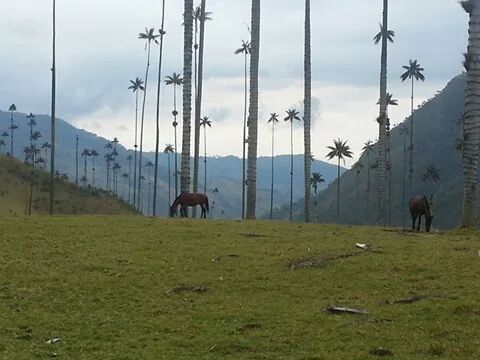
Backpacker’s beware – you will spend more time in Salento than you planned.
Leaving Medellin, we took a bus to Manizales – one of the three cities in the coffee region of Colombia (Periera and Armenia being the other two). We drove through the mountains and eventually spiraled down into a valley with another large city. We were pretty tired of city life so we spent one night there and did some research on where to head next. The word on everyone’s mouth was Salento so we took the chance and headed there the next day.
Our research pointed us to The Plantation House. We took the bus into the small town of Salento, nestled in the mountains. The hostel, also a working coffee plantation, offered just what we were looking for – relaxing with a beautiful backdrop.
We spent Saturday night on the town square drinking beer and Aguadiente with the locals. Sunday – we did nothing except admire the little town and its lookout places. Salento is such a quaint little mountain town with stunning views.
Monday we decided to take the coffee plantation tour and were so glad to learn the farming side of coffee. The guide took us through all the steps from coffee cherries to green beans. They even roasted dry beans in front of us, ground the roasted beans, and made us the freshest coffee you can ever have.
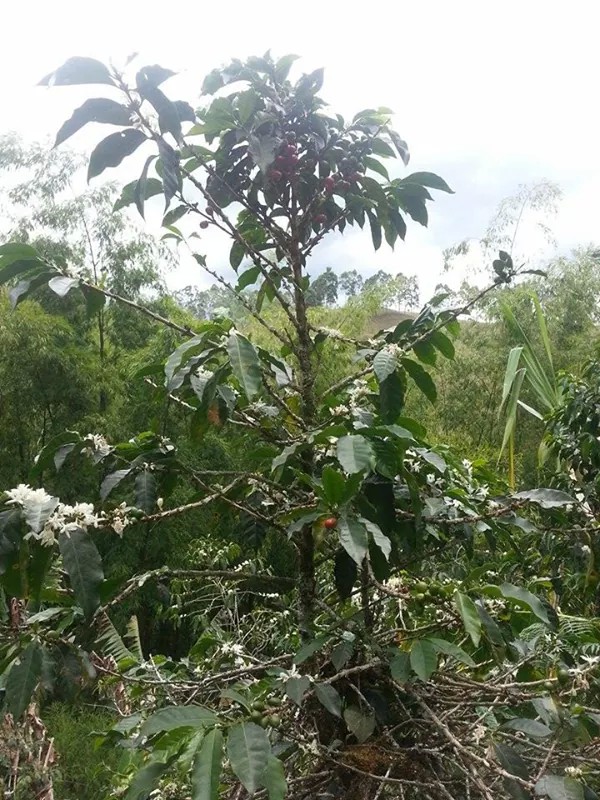


Removing the skin from dry beans


Tuesday, we were intending to tour the Valle de Cocora but we were stopped. The Plantation House asked us to switch rooms, which is mildly inconvenient but fine. But the other room cost more money. We were a little frustrated so we looked for an alternative hostel. During our search, we landed upon Hostel La Casona which offered cheaper dorm room and even cheaper tents with matresses (10,000 per person, about $5). Bingo.
We made the switch just as a group from the hostel was about to leave to hike to a nearby waterfall. We jumped on board and made our way. The hike was about 5 hours total with about an hour enjoying a picnic by the waterfall and a very brief extra freezing swim in the fall.
Wednesday, Esteban, our guide from the previous day, was taking a group to hike the Valle de Cocora. We happily joined and were stunned by the amazing views while we walked down the mountain. The Valle has hundred year old huge wax palms growing on the mountain. It seriously looks like Jurrasic Park could have been filmed there.
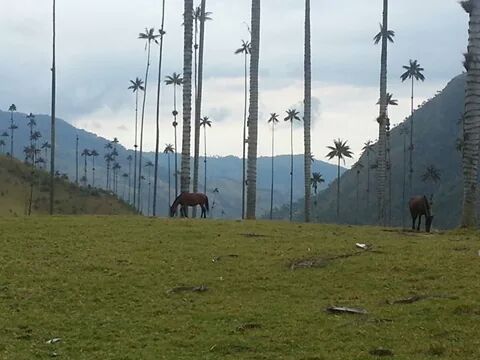
Thursday, we spent the day relaxing after the hike. We decided to stay one more night (as the saying goes). While we were enjoying a beer, Scott, and Australian bloke, showed up asking about visiting Los Nevados National Park nearby. Some of the mountain range hits 5000 meters and a few have Colombias only snow. We were interested in the sound of the hike so we decided to wait another day to get a little more information. That evening, we watched the guys from a few hostels play futbol. At least the following countries were represented in the game: Colombia, Australia, USA, France, Germany, Israel, and The Netherlands. There were probably more. Travelling is cool.
After watching the guys play, we decided to go try out a local game called Tejo. Tejos are heavy palm sized stones. Everyone is assigned their own tejo and teams are formed. Each player throws the tejo at a board covered in a clay mud mixture where it sticks. There is a metal ring in the center with four paper triangles on points of the circles. These paper triangles are filled with gun powder which explodes between the stone and the metal . The goal is to get the tejo inside the ring for the most points, but it’s far more entertaining to hit the paper triangles for less points. What a game.
Friday, the guide showed up and we discussed the details of the hike. The price for his was about 180,000 per person for 2 nights, 3 days. We were all interested, but Esteban decided to call his friend Freddy who has guided groups through Los Nevados before to ask a few questions. Freddy arrived an hour later and said he would guide us up for about a third of the price. Sweet. That day, we readied our backpacks and bought provisions for the trip. We would be heading out at 5 am to begin the incredible ascent.
With a little bit of nerves and a lot of excitement, the group ate breakfast and headed out, five of us including Freddy, our guide. Our hike began in the Valle de Cocora at about 6 am. The five of us began the ascent very early with about 18 lbs each in our bags. Up we went. And up. Up. More up.
As much as I love nature and have done my share of nature walks, this was my first true overnight backpacking hiking experience. And my lack of experience for this daunting hike was pretty obvious right away. Our trek began at 1500 meters and that day we would reach 4000 meters.
Up.
Up.
Mud. SO much mud.
Up. Mud. Up.
Up. Jumping from small patch of grass to another small patch of grass. I felt like I was playing a human game of Frogger.
Up. So. Steep.
Literally, 12 hours later, we were at 4000 meters. I’ve never been so high. We were surrounded by clouds with such strange flora, gigantic cows, and eventually we reached Finca Primavera. This family run farm also serves as a hostel for hikers. We stopped just to have some panella (a hot drink made of cane sugar) and continued walking towards the next Finca, Jabon.
When we left Primavera, darkness quickly followed us. We were making our way by flashlight (seriously, I thought I left night hiking behind in Costa Rica). All of us were growing very weary, cold, and exhuasted. Freddy stated that it was only an hour between Primavera and Jabon but that stretched to almost two hours. We kept walking and eventually saw a light in the distance. Humberto approached on horse to guide us up the rest of the way. We had to do one last river crossing to make it to the house. I was given the hand of Esteban and Freddy. On my last step, the backpack took my balance and without their help, I would have landed, back first, in the freezing river with soaked clothes. Never have I been so grateful.
Tired and weary, we made it to Humberto’s home. This house, 4000 meters in the mountains, was like stepping back 100 years in time. We sat in Humberto’s kitchen with a fire stove running to try to warm us all up. He graciously welcomed us in and made us feel at home. We drank panella con leche (fresh milk from the cow outside) and began to make our dinner. After dinner, we quickly fell asleep in the tent we pitched inside the shelter.
The next morning, we intended to ascend another 1000 meters to the snow line on the mountain. Unfortunately (sort of), the rain hindered our early morning start which was necessary to do the ascent. Alternatively, we walked to the lake near Humberto’s house. My only bummer about this trip was here. As I reached into my pocket to capture the beauty of the lake, my phone was no longer there. I knew I had used it within a kilometer for another picture so I turned around to look for it. No dice. I returned to enjoy the lake, but my mind was clouded by the loss of all my pictures and videos of my travels. We walked back the direction we came, but had no luck finding my phone. (No they aren’t backed up. Yes, I am a rookie. Yes, that was stupid. Stil, it is sad.)
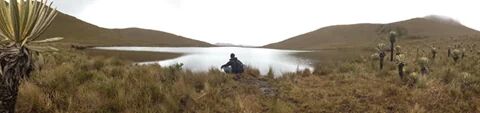
We made our way back to Humberto’s for lunch and grabbed our bags. We then made the walk over to Primavera to stay for the night. We had a great meal with, of course, Panella. The next morning, it was time to return to society 2000 meters below. At about 8 am, we began to go down.
Down.
Down.
Mud, frogger, down.
Down.
Holy hell, did I climb all of this???
Down.
Down.
My God, I DID climb this.
Mud. Down.
Down.
What we climbed a few days before in 12 hours took us 7 to decend. We were happily back in Valle de Cocora and took a Jeep back to Salento.
What a hike.
Back in Salento, we scarfed some food and, finally, showered! Lucky us, while we were away, the hostel planned a barbeque party for the evening. We celebrated with chorizo, beers, and aguadiente and told the crazy story of our adventure. Literally, the most physically difficult thing I’ve ever done in my life.
I adored Salento and my time in Colombia. The landscapes are just as beautiful as the people.
But, as always, time to move on. And buy a new phone / camera. Paypal donations can be sent to bex8822@yahoo.com. Just kidding. (mostly 😉 )
We’re off.

No, I did not make this shirt. Can’t believe it found me! Happy #caturday!
Psst. I have been writing down all the money we have spent which I will compile when I get home. We are averaging about $32 / day for everything!!
 Infinite Geography